





What's Happening?
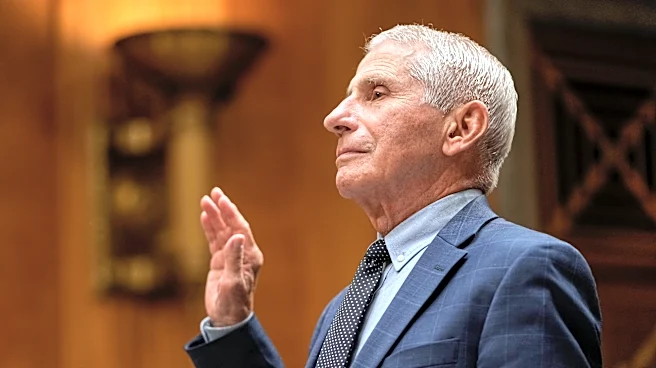
A Senate committee is currently investigating Anthony Fauci, the former chief of the National Institute of Allergy and Infectious Diseases, focusing on his role during the COVID-19 pandemic. The investigation was prompted by the release of Fauci's diary,
reportedly obtained from a government server by Health and Human Services Secretary Robert F. Kennedy Jr. The diary's publication has sparked controversy, with accusations against Fauci regarding his handling of the pandemic and the origins of the coronavirus. Despite these allegations, Fauci's contributions to vaccine development and public health measures are acknowledged.
Why It's Important?
The investigation into Fauci highlights ongoing political tensions and differing narratives surrounding the COVID-19 pandemic. Fauci's role as a prominent public health figure has made him a target for criticism, particularly from those questioning the origins of the virus and the effectiveness of pandemic measures. This scrutiny reflects broader debates about government transparency, scientific communication, and public trust in health authorities. The outcome of this investigation could influence public perceptions of the pandemic response and shape future health policies.
What's Next?
The Senate committee's findings could lead to further inquiries or policy recommendations regarding pandemic preparedness and response. The investigation may also impact Fauci's legacy and the public's trust in scientific and health institutions. As political and public health leaders continue to navigate the aftermath of the pandemic, the focus will likely remain on improving transparency and communication to better prepare for future health crises.