





What's Happening?
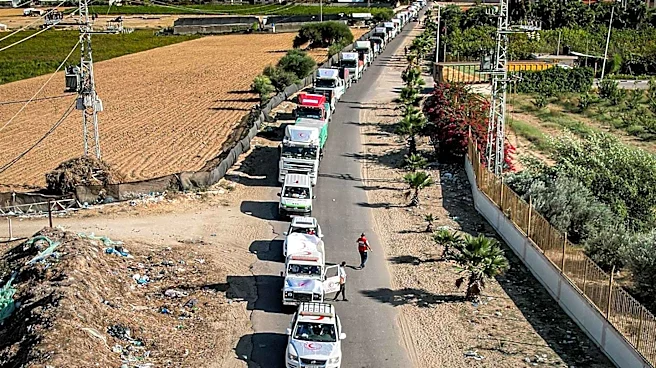
Sudan's Emergency Response Rooms (ERRs), a network of decentralized volunteer groups, are providing essential humanitarian aid across all 18 states of Sudan. These rooms, which emerged from the Neighbourhood Resistance Committees of the 2019 revolution
and the tradition of 'nafeer' (collective community action), operate with nearly 26,000 volunteers. They run communal kitchens, organize health and water support, and coordinate local assistance where public services have collapsed and international agencies struggle to operate. The ERRs have received international recognition, including the 2025 Right Livelihood Award and the EU in Sudan Human Rights Prize 2025, for their critical role in delivering aid to over four million people. Despite their vital work, volunteers face significant risks, with members reportedly detained, tortured, and killed, and nearly 160 volunteers having lost their lives.
Why It's Important?
The effectiveness of Sudan's Emergency Response Rooms underscores a critical lesson for international aid organizations and donors: locally led initiatives can be more agile and effective in conflict zones where formal systems have broken down. These volunteer networks possess intimate knowledge of local needs, safe routes, and community dynamics, allowing them to deliver aid more efficiently and build trust. Their success highlights the limitations of traditional, top-down humanitarian models in complex emergencies and advocates for a shift towards empowering and funding local groups directly. This approach can ensure that aid reaches the most vulnerable populations quickly and appropriately. However, it also presents challenges for funders, who must adapt their reporting and risk management procedures to accommodate small, informal volunteer networks without burdening them with bureaucratic requirements or exposing volunteers to greater danger.
What's Next?
The continued operation and expansion of Sudan's Emergency Response Rooms will depend on sustained and adapted international funding. Donors and international agencies are increasingly being urged to design funding mechanisms that are flexible, provide small grants, and reduce the number of intermediaries to ensure funds reach local groups directly. There is a growing call to share risks with these volunteer networks rather than transferring all accountability to them, acknowledging the inherent dangers of operating in a war zone. Future efforts will likely focus on developing proportionate accountability measures, such as simple spending summaries and community feedback channels, that do not compromise volunteer safety. Additionally, capacity-building support tailored to the specific needs of these groups, such as basic financial recording and digital security, will be crucial for their long-term sustainability and effectiveness.
Beyond the Headlines
The model of Sudan's Emergency Response Rooms offers profound insights into the resilience of communities in the face of state collapse and prolonged conflict. It challenges conventional notions of humanitarian aid, suggesting that true impact often originates from within affected communities. This phenomenon raises ethical questions about the responsibility of international actors to support and protect local volunteers who are often at the forefront of aid delivery, risking their lives. The recognition of ERRs through prestigious awards also highlights a global shift in acknowledging the power of grassroots movements in humanitarian response. This approach could foster greater self-reliance and community empowerment, potentially leading to more sustainable recovery efforts post-conflict, but it also necessitates a re-evaluation of power dynamics and resource allocation within the global humanitarian system.