
What's Happening?
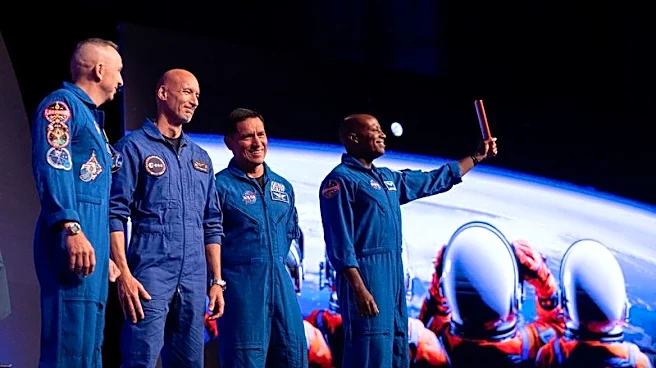
A symposium titled 'Living Beyond Earth' at the Harvard Radcliffe Institute gathered experts to discuss the opportunities and hazards of space colonization, highlighting a renewed 'Space Race.' Michelle
L.D. Hanlon, executive director of the University of Mississippi’s Center for Air and Space Law, emphasized the limited scope of current space law, noting that the Outer Space Treaty, a mere 17 articles long, primarily grants freedom of exploration and use. Dava J. Newman, former NASA deputy administrator, identified radiation impact as a 'showstopper' for long-duration space travel, particularly to Mars. Ariel Ekblaw, who runs Aurelia Institute, pointed out the dramatic decrease in space flight costs, now around $1,500 per kilogram, fueling the current push into space. The symposium also addressed the growing problem of 'space junk,' with SpaceX performing over 350,000 maneuvers last year to avoid debris, and the mental and physical health challenges of long-term space residency.
Why It's Important?
The discussions at the Harvard Radcliffe Institute symposium underscore the multifaceted challenges and opportunities presented by the renewed global interest in space exploration and colonization. The limited and outdated nature of current space law, as highlighted by Hanlon, creates a regulatory vacuum that could lead to disputes over resources and activities in space, particularly as nations like the U.S. and China vie for lunar resources. Newman's concern about radiation impact is critical for the safety and feasibility of human missions to Mars, necessitating significant advancements in protective technologies. The drastic reduction in launch costs, as noted by Ekblaw, is democratizing access to space, fostering a new era of commercial space ventures and potentially accelerating technological innovation. However, this increased activity also exacerbates issues like space junk, posing a threat to existing infrastructure and future missions, and raising questions about environmental responsibility in orbit.
What's Next?
Addressing the challenges raised at the symposium will require concerted efforts from international bodies, governments, and private industry. The inadequacy of current space law suggests a need for new international agreements and regulatory frameworks to govern activities in space, including resource extraction, debris mitigation, and liability. Research into radiation protection, such as genetic adaptation and advanced shielding, will be crucial for enabling long-duration human missions. The continued decrease in launch costs will likely drive further commercial investment and innovation in space technologies, potentially leading to more accessible and frequent space travel. However, this also necessitates the development of effective strategies for managing space junk and ensuring the long-term sustainability of orbital environments. Future discussions will likely focus on balancing the economic potential of space with the need for responsible governance and environmental stewardship.
Beyond the Headlines
The 'new space race' discussed at the symposium is not merely a competition for technological supremacy but also a contest over the future of human civilization beyond Earth. The ethical implications of space colonization, including the potential for exploitation of resources, the governance of off-world settlements, and the long-term psychological and physiological effects on human colonists, are profound. The concept of 'space junk' highlights a critical environmental issue that mirrors terrestrial pollution, raising questions about humanity's responsibility to preserve the pristine nature of space. Furthermore, the symposium's focus on mental health challenges in space travel, such as isolation and 'Earth-disconnect phenomenon,' points to the need for a holistic approach to space exploration that considers not only technological feasibility but also human well-being and societal impact. This evolving frontier demands a re-evaluation of our legal, ethical, and social frameworks to ensure a sustainable and equitable future in space.