



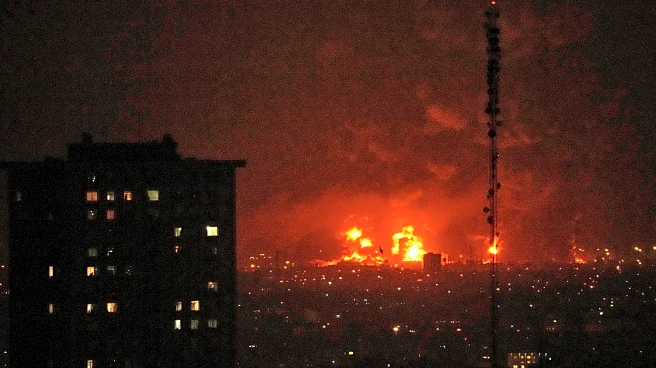
What's Happening?
The US State Department has reported that more than half of US citizens who requested assistance to leave the Middle East have declined government-provided transportation options. Some individuals prefer to remain in their current locations, while others
are opting for alternative departure methods. The department continues to assist those wishing to leave and has recommended an overland route through Egypt for US citizens in Israel. The US Embassy in Israel has initiated bus services to Taba, Egypt, to facilitate departures. The State Department has completed nearly two dozen charter flights, evacuating thousands of US citizens, and continues to ramp up operations as security conditions allow.
Why It's Important?
The decision by many US citizens to decline government evacuation options highlights the complexities and personal considerations involved in international evacuations. This situation underscores the challenges faced by the US government in providing assistance during crises, as well as the importance of offering flexible and varied options to accommodate different needs. The ongoing efforts to evacuate citizens reflect the US government's commitment to ensuring the safety of its nationals abroad, while also emphasizing the logistical and diplomatic challenges involved in such operations.
What's Next?
The US State Department will likely continue to monitor the situation closely and adjust its evacuation strategies as needed. The department may increase the frequency of charter flights and ground transport operations if demand rises. Additionally, the US government may engage in further diplomatic efforts with regional partners to ensure safe passage for its citizens. The situation may also prompt a review of current evacuation protocols to enhance efficiency and responsiveness in future crises.