







What's Happening?
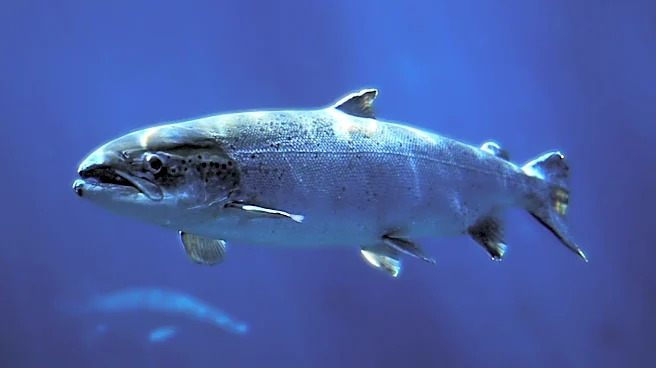
New research published in Science Advances reveals that the survival of California's endangered winter-run Chinook salmon eggs is critically dependent on cold water temperatures during the first 15 days after fertilization. This finding is particularly
significant for the single remaining population in the Sacramento River, which is blocked from its historical cold-water spawning grounds by Shasta Dam. Scientists, including Kohma Arai and Rachel Johnson, discovered that even a slight increase of 1.8°F (1°C) in average river temperature during this crucial period can reduce the probability of juvenile survival by approximately 73 percent. This bottleneck in early development means that many spawning events may not produce surviving offspring, challenging previous assumptions based solely on adult salmon counts. The study utilized advanced techniques, including analyzing oxygen isotopes in salmon ear bones (otoliths), to reconstruct the thermal conditions experienced by developing eggs.
Why It's Important?
This research has profound implications for U.S. conservation efforts and water management policies, particularly in California. The Sacramento River winter-run Chinook salmon are a federally endangered species, and their survival is a key indicator of ecosystem health in the region. The findings highlight the urgent need for precise and effective cold-water management strategies, especially during increasingly frequent warm, low-water years exacerbated by climate change. Water managers, who balance the needs of salmon with those of agriculture and urban areas, now have critical data to inform decisions about reservoir releases. Protecting this species is not only an ecological imperative but also has cultural significance for tribal communities and economic relevance for the fishing industry. The study underscores that traditional methods of assessing population health may be insufficient, necessitating a shift towards understanding early life-stage vulnerabilities to prevent extinction.
What's Next?
The findings are expected to prompt a re-evaluation of current water management practices in California, particularly concerning the release of cold water from Shasta Reservoir. Water agencies, irrigators, and federal and state fish agencies will likely use this research to refine strategies for protecting salmon eggs during the critical 15-day window. This could involve more targeted cold-water releases or exploring alternative approaches such as reintroducing salmon to historical habitats above Shasta Dam. Scientists will continue to monitor river temperatures and salmon populations, potentially using the otolith analysis method to track the success of spawning events more accurately. The research also suggests a need for broader climate adaptation strategies to mitigate the impacts of warming waters on endangered aquatic species, potentially influencing future policy decisions at both state and federal levels.
Beyond the Headlines
Beyond the immediate implications for salmon conservation, this study illuminates the broader challenges of managing endangered species in an era of rapid climate change. It highlights the concept of 'thermal bottlenecks,' where specific environmental conditions during critical life stages can disproportionately impact population survival. This principle could be applied to other temperature-sensitive species, informing conservation efforts across diverse ecosystems. The research also showcases the power of interdisciplinary collaboration, combining fisheries biology, hydrology, and advanced analytical techniques like ion microprobe analysis. Ethically, it raises questions about human responsibility in mitigating the impacts of infrastructure (like dams) and climate change on natural ecosystems. The long-term shift could involve a greater emphasis on ecosystem-based management, where the interconnectedness of species and their environment is prioritized, moving beyond single-species recovery plans to holistic ecological restoration.