


What's Happening?
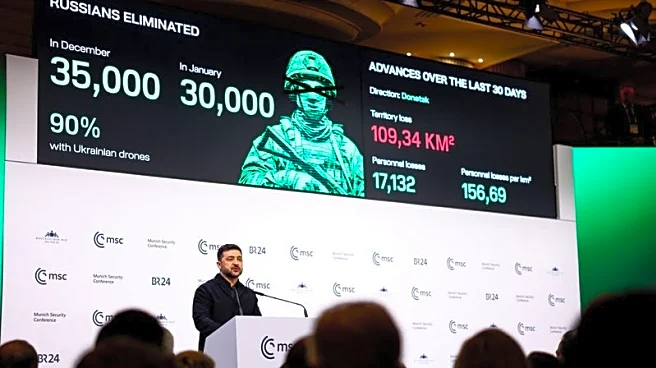
Ukraine's President Volodymyr Zelensky has publicly criticized Russian President Vladimir Putin, labeling him a 'slave to war' during a speech at the Munich Security Conference. Zelensky highlighted the extensive damage inflicted on Ukraine's power infrastructure
by Russian attacks, noting that every power plant in the country has been affected. He drew historical parallels between the current negotiations over territorial concessions and the 1938 Munich Agreement, warning against the illusion that dividing Ukraine could end the conflict. Zelensky emphasized the need for viable security guarantees to prevent future Russian aggression and called for faster delivery of air-defense systems from Western allies. The speech comes as Ukraine prepares for US-brokered talks with Russia in Geneva, following previous negotiations in Abu Dhabi.
Why It's Important?
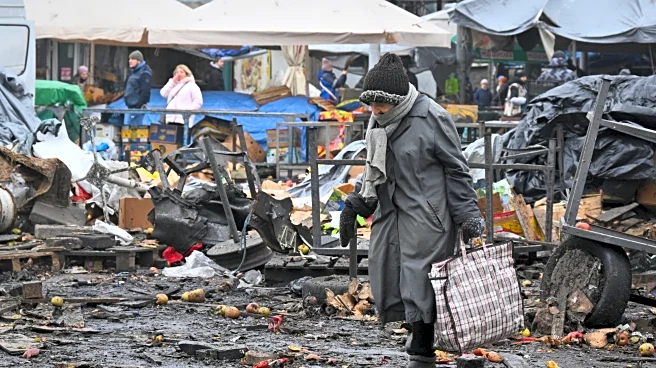
Zelensky's remarks underscore the ongoing geopolitical tensions and the severe impact of the conflict on Ukraine's infrastructure and civilian population. The destruction of power plants has significant humanitarian implications, potentially leaving millions without electricity. The call for security guarantees and air-defense systems highlights Ukraine's strategic needs and the role of Western allies in supporting its defense. The historical comparison to the Munich Agreement serves as a cautionary tale, emphasizing the risks of appeasement in international diplomacy. The outcome of the upcoming talks in Geneva could influence the future trajectory of the conflict and the stability of the region.
What's Next?
The upcoming Geneva talks between Ukraine and Russia, facilitated by the United States, are critical in seeking a resolution to the conflict. Zelensky's insistence on security guarantees and the involvement of European countries in negotiations could shape the diplomatic approach. The international community, particularly Western allies, may face increased pressure to expedite military and political support for Ukraine. The potential for a diplomatic breakthrough remains uncertain, but the talks could set the stage for future negotiations and influence the broader geopolitical landscape.