







What's Happening?
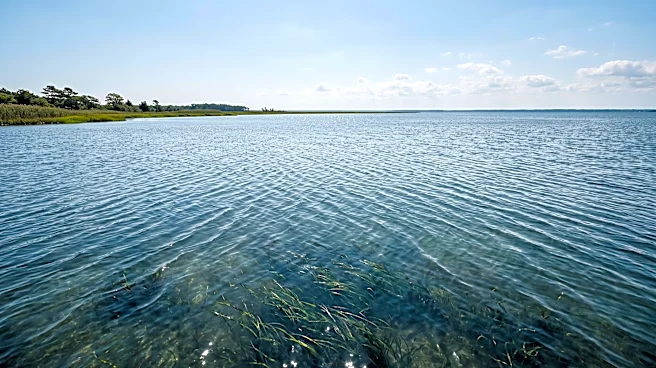
Bull sharks are being observed further north in the Chesapeake Bay, with reports indicating their presence up to Aberdeen Proving Ground, near the mouth of the Susquehanna River, particularly during drought years. Historically, most bull shark sightings
in the bay have been in its saltier southern reaches. However, recent observations, including two 8-foot bull sharks caught in fishing nets in Maryland's part of Chesapeake Bay in 2013 and another 310-pound bull shark in 2018, suggest a shift. Scientists from the Smithsonian Environmental Research Center in Maryland have tagged bull sharks with acoustic transmitters to track their movements along the East Coast. The Chesapeake Bay Program notes that the water in the bay and its rivers is warmer than in past decades, which may contribute to these extended migrations. Bull sharks typically arrive in late May and can stay until October before heading south as waters cool.
Why It's Important?
The increased presence of bull sharks in the northern Chesapeake Bay has significant implications for the region's ecosystem and human activities. Bull sharks are known for their ability to tolerate fresh water, making them unique among shark species and allowing them to venture far up rivers and estuaries. This expansion could alter local aquatic food webs, potentially impacting native fish populations and other marine life. For human stakeholders, particularly fishermen and recreational water users, the presence of these large predators raises concerns about safety and changes in fishing practices. While the Chesapeake Bay Program considers bull sharks no significant threat to human safety in the bay, isolated incidents and the sheer size of these animals can cause public apprehension and lead to precautionary measures, such as beach evacuations, as seen in 2014 near Annapolis.
What's Next?
Continued monitoring and research will be crucial to understand the long-term effects of bull sharks extending their range in the Chesapeake Bay. Scientists will likely intensify efforts to track their movements and study their interactions with the local environment. Public awareness campaigns may be necessary to inform residents and visitors about the presence of bull sharks and appropriate safety measures. Furthermore, the observed expansion of bull shark nursery habitats, such as in Pamlico Sound, North Carolina, due to warmer, saltier water, suggests that this trend could continue. This may prompt discussions among environmental agencies and local governments about potential management strategies to balance ecological changes with human safety and economic interests in the bay region.
Beyond the Headlines
The northward migration of bull sharks into the Chesapeake Bay serves as a tangible indicator of broader climate change impacts on marine ecosystems. The warming waters of the bay, as noted by the Chesapeake Bay Program, are directly linked to the sharks' extended seasonal presence. This phenomenon highlights how subtle environmental shifts can lead to significant changes in species distribution, potentially disrupting established ecological balances. The ability of bull sharks to thrive in varying salinities makes them particularly adaptable to these changes, potentially positioning them as a bellwether species for climate-induced alterations in coastal environments. This situation underscores the need for comprehensive climate adaptation strategies and integrated ecosystem management to address the cascading effects of a changing climate on biodiversity and human communities.