







What's Happening?
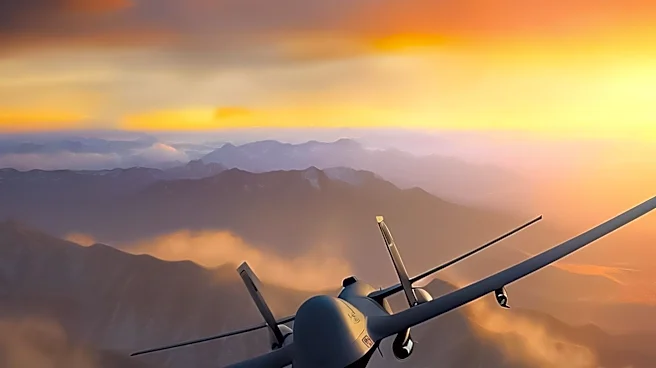
Despite Sudan being the continent's largest theater for drone use, these unmanned aerial systems are not providing a decisive military edge in the ongoing conflict. This observation, highlighted in a security brief by Nate DF Allen and amplified by Matthew
Mpoke Bigg in The New York Times, suggests that while drones are increasingly integrated into armed conflict, their strategic utility has limitations. Drones, for instance, cannot hold territory. A key factor contributing to their non-decisive role is the ability of combatants to adapt to their presence and develop countermeasures. This pattern of adaptation to new military technology is common throughout the history of warfare. The extensive use of drones by both sides, and the anticipation of their use, is also driving displacement of refugees, even in areas far from active combat zones.
Why It's Important?
The situation in Sudan offers critical insights for the U.S. military and defense strategists regarding the practical limitations of drone warfare. While drones are often touted as game-changers, their inability to provide a decisive military edge in a prolonged conflict like Sudan's suggests that human factors, ground forces, and adaptive tactics remain paramount. This challenges the notion that technological superiority alone can guarantee victory. For U.S. defense planning, it underscores the importance of a balanced approach that integrates advanced technology with robust ground capabilities and comprehensive training for diverse combat scenarios. The displacement of refugees due to drone use also highlights the significant humanitarian impact of these technologies, which must be considered in military ethics and international policy discussions.
What's Next?
The ongoing adaptation by combatants in Sudan to drone technology suggests that the effectiveness of these systems will continue to evolve. This could lead to the development of more sophisticated counter-drone measures, electronic warfare tactics, and camouflage techniques. For the U.S. and its allies, this implies a continuous need for research and development in both drone technology and anti-drone systems to maintain a technological advantage. Furthermore, the humanitarian consequences of drone use, particularly refugee displacement, will likely prompt increased attention from international organizations and calls for stricter regulations on drone deployment in conflict zones. The Sudanese conflict may serve as a case study for understanding the long-term societal impacts of widespread drone warfare.
Beyond the Headlines
The Sudanese conflict's experience with drones reveals a deeper truth about military innovation: no single technology, however advanced, can unilaterally determine the outcome of a war. The 'war of attrition' described in Sudan, where drones are present but not decisive, illustrates the enduring human element in conflict—the capacity for adaptation, resilience, and strategic thinking. This challenges the often-futuristic narratives surrounding drone warfare, reminding us that technology is a tool whose effectiveness is shaped by context, adversary capabilities, and human ingenuity. It also raises profound ethical questions about the psychological impact of constant drone surveillance and strikes on civilian populations, contributing to displacement and trauma even without direct physical harm. This underscores the need for a holistic understanding of warfare that goes beyond technological specifications to encompass human behavior, societal impact, and ethical considerations.