
What's Happening?
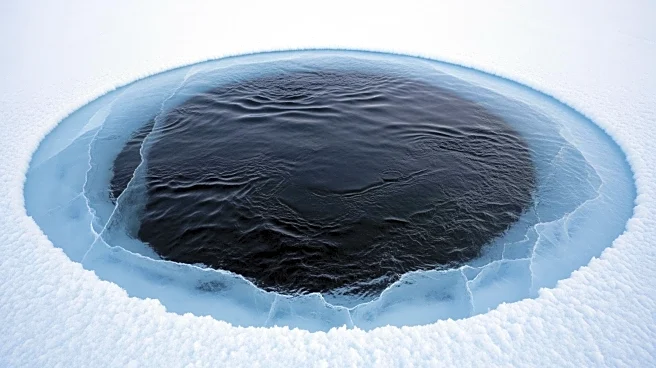
During the Antarctic winters of 2016 and 2017, a significant polynya, a large hole in the sea ice, was detected in the Weddell Sea. This phenomenon, roughly the size of Switzerland, appeared in an area
where the ice should have been thickest. The polynya was driven by a process called Ekman-driven salt transport, where eastward surface winds pushed saltier water, disrupting the ocean's vertical layering. This led to the upwelling of warmer, saltier water from the deep ocean, melting the sea ice from below. The event created a feedback loop, maintaining the open water patch and releasing heat to the atmosphere. The study, published in Science Advances, used the Southern Ocean State Estimate model to analyze the event, revealing how local wind and salinity changes can significantly impact oceanic and atmospheric conditions.
Why It's Important?
The formation of the Maud Rise polynya highlights the sensitivity of the Southern Ocean to changes in wind and salinity, which can have global climate implications. Such events can alter the Earth's heat balance and affect the formation of Antarctic Bottom Water, a crucial component of global ocean circulation. The study suggests that similar events could become more frequent if current climate trends continue, potentially impacting weather patterns, sea-level rise, and carbon cycling. The Southern Ocean's role in absorbing excess heat and carbon is critical in buffering against rapid climate change, but events like this show the system's instability and potential for significant environmental shifts.
What's Next?
If wind patterns continue to shift or sea-ice cover weakens, similar open-ocean convection events could recur more frequently. This could lead to more significant releases of heat and carbon dioxide from the ocean to the atmosphere, influencing global climate systems. Researchers will likely continue to monitor these conditions to better understand the potential for future polynyas and their broader environmental impacts.
Beyond the Headlines
The Maud Rise polynya event underscores the complex interactions between oceanic and atmospheric forces and their potential to drive significant environmental changes. It raises questions about the long-term stability of the Southern Ocean's role in global climate regulation and the potential for unforeseen consequences as climate change progresses. Understanding these dynamics is crucial for predicting future climate scenarios and developing strategies to mitigate their impacts.