






What's Happening?
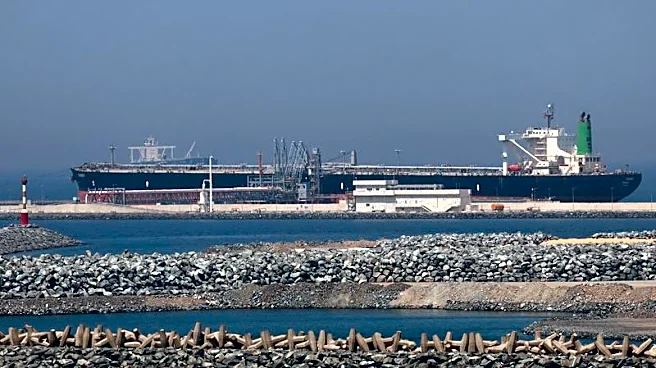
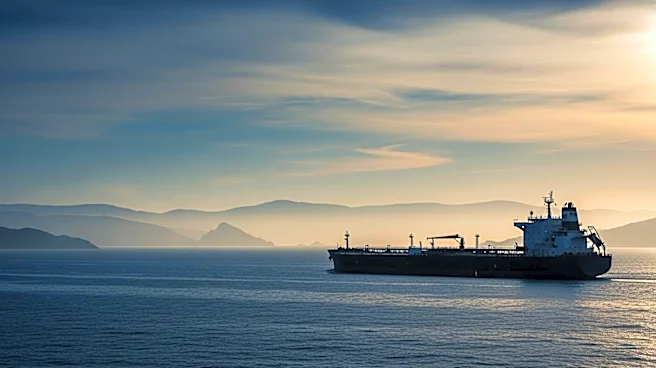
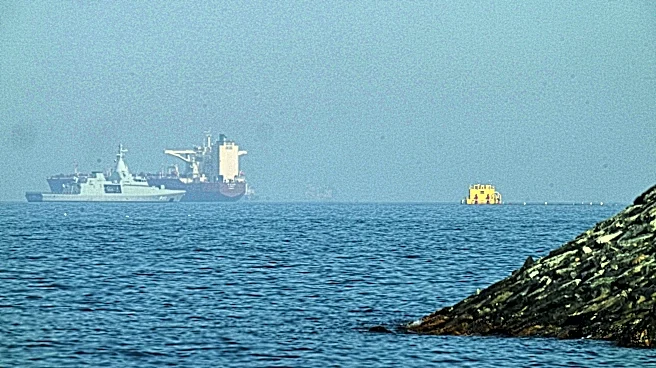
Saudi Arabia's Aramco Trading Co. and the UAE's Adnoc have been moving crude oil tankers through the Strait of Hormuz despite Iran's effective closure of the waterway. This action comes as Iran has been menacing shipping in the strait, seizing vessels,
and escalating regional tensions. Although the total oil flow is significantly reduced, these companies are managing to transport some supply to global markets. The transits often occur with transponders turned off to avoid detection, highlighting the risks involved. The situation has led to a global supply crisis, with companies paying higher prices to ensure shipments.
Why It's Important?
The Strait of Hormuz is a critical chokepoint for global oil supply, and its closure has significant implications for international energy markets. The actions of Aramco and Adnoc to navigate this challenging environment underscore the strategic importance of maintaining oil flow despite geopolitical tensions. The disruption in oil supply can lead to increased global oil prices, affecting economies worldwide. Additionally, the situation highlights the vulnerabilities in global energy infrastructure and the need for diversified supply routes to mitigate such risks.
What's Next?
As tensions in the Strait of Hormuz continue, companies and governments may seek alternative routes and methods to ensure the steady flow of oil. This could involve increased investment in pipeline infrastructure or the development of new shipping lanes. Diplomatic efforts may also intensify to de-escalate the situation and secure safe passage for oil tankers. The international community will likely monitor the situation closely, as prolonged disruptions could have far-reaching economic and political consequences.
Beyond the Headlines
The ongoing tensions in the Strait of Hormuz highlight broader geopolitical dynamics in the Middle East, including the strategic interests of regional and global powers. The situation raises questions about energy security and the reliance on oil from politically unstable regions. It also underscores the importance of transitioning to renewable energy sources to reduce dependency on fossil fuels and enhance global energy resilience.