


What's Happening?
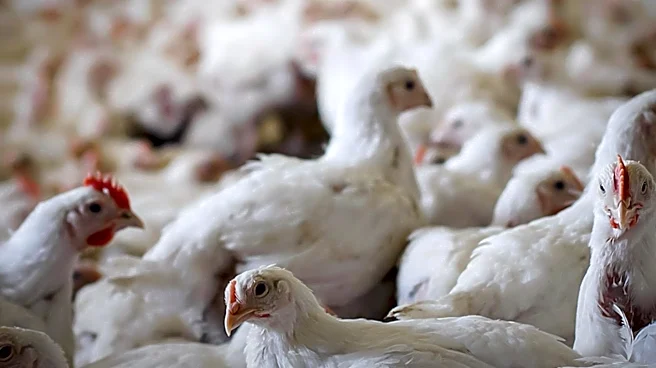
A joint research project by the London School of Economics (LSE) and New York University (NYU) is mapping site-level climate hazards to industrial animal agriculture operations in the United States and Bangladesh. The project, funded by the 2024/25 LSE-NYU
Joint Research Seed Fund, aims to understand the risks posed by intensified climate change and extreme weather events, such as heat waves, storms, floods, and droughts, to these facilities. While previous research has identified broad regional risks to agricultural systems, this project focuses on assessing physical climate hazards at the specific sites where industrial animal production facilities are currently operating or planned. The research utilizes AI and machine-learning techniques combined with Earth observation and climate data, including NASA datasets, to identify and evaluate the exposure of these sites to climate extremes. The goal is to provide better-informed debate about the relationship between climate change adaptation and industrial farming methods.
Why It's Important?
This research is crucial for the United States as it directly addresses the vulnerability of its industrial animal agriculture sector to climate change. The findings will help identify specific areas and facilities at high risk from extreme weather events, which can lead to significant economic losses, disruptions in food supply chains, and potential animal welfare issues. Understanding these site-specific hazards allows for more targeted adaptation strategies, potentially influencing investment decisions, insurance policies, and regulatory frameworks within the U.S. agricultural industry. For instance, it could inform where new facilities are built, how existing ones are retrofitted, and what emergency preparedness measures are necessary. The project's focus on the U.S. provides valuable data for policymakers, industry stakeholders, and local communities to develop resilient agricultural systems, mitigate financial risks, and ensure the long-term sustainability of food production in the face of a changing climate. The insights gained could also guide federal and state funding for climate adaptation in agriculture.
What's Next?
The LSE-NYU project is expected to produce peer-reviewed publications on the mapping of industrial animal agriculture and climate change adaptation, with target journals including Nature Climate Change and Nature Sustainability. A proof-of-concept approach for assessing industrial animal agriculture and site-specific climate hazards in Bangladesh and the USA is being developed, with the intention of expanding this methodology globally. The research team plans to seek larger external funding from organizations such as the USDA National Institute of Food and Agriculture and the US National Science Foundation's Human-Environment and Geographical Sciences Program, as well as civil society organizations. A workshop will be held to share findings with regional stakeholders, policymakers, and academics, supported by the NYU Center for Environment and Animal Protection. Initial findings will also be translated into improved investment guidance through the Coller Foundation's FAIRR Initiative, indicating a direct path to influencing financial decisions related to industrial animal agriculture.
Beyond the Headlines
Beyond the immediate implications for climate adaptation in agriculture, this research highlights the broader ethical and economic challenges associated with industrial animal agriculture. The project's focus on site-level hazards underscores the localized impacts of climate change, which can disproportionately affect certain communities and ecosystems. The use of AI and machine learning in this context signifies a growing trend towards data-driven approaches in environmental management and risk assessment, potentially revolutionizing how industries prepare for and respond to climate threats. Furthermore, the collaboration between LSE and NYU, and the involvement of various funding bodies and initiatives, points to the increasing recognition of climate change as a complex, interdisciplinary problem requiring international cooperation and diverse expertise. The project's outputs could also fuel public debate on the sustainability of current food production models and the need for systemic changes in agricultural practices.