






What's Happening?
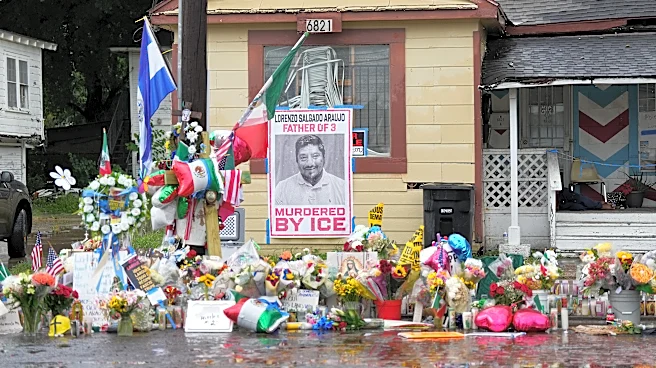
A significant development has emerged in the case of Lorenzo Salgado Araujo, a Mexican immigrant who was fatally shot by an Immigration and Customs Enforcement (ICE) officer in Houston. The Harris County District Attorney's office announced that a substance
found in Salgado Araujo's work van tested negative for illicit drugs, contradicting earlier claims by federal officials. ICE had alleged that Salgado Araujo 'weaponized' his vehicle during a traffic stop, leading to the shooting. The FBI had previously suspected the van contained methamphetamine, based on photos showing a white crystal-like substance. However, the recent test results refute these suspicions. Salgado Araujo's family, represented by the ACLU of Texas, has maintained that the substance was likely granulated salt used for a homemade electrolyte mix. The FBI and ICE's internal oversight office are reviewing the incident, while the district attorney's office is conducting its own investigation.
Why It's Important?
This revelation challenges the narrative presented by ICE and raises questions about the justification for the use of lethal force. The case highlights ongoing concerns about ICE's enforcement practices and the treatment of immigrants in the U.S. The outcome of the investigations could have significant implications for ICE's operational protocols and accountability measures. It also underscores the broader debate over immigration enforcement and the rights of undocumented individuals. The case has drawn attention from civil rights organizations and could influence public opinion and policy discussions regarding immigration enforcement and oversight.
What's Next?
The investigations by the FBI, ICE's internal oversight office, and the Harris County District Attorney's office are ongoing. The district attorney has indicated a willingness to prosecute ICE agents if criminal wrongdoing is found. The findings of these investigations could lead to changes in ICE's procedures and potentially impact future cases involving the use of force by federal agents. The case may also prompt legislative or policy responses aimed at increasing oversight and accountability for immigration enforcement agencies.