



What's Happening?
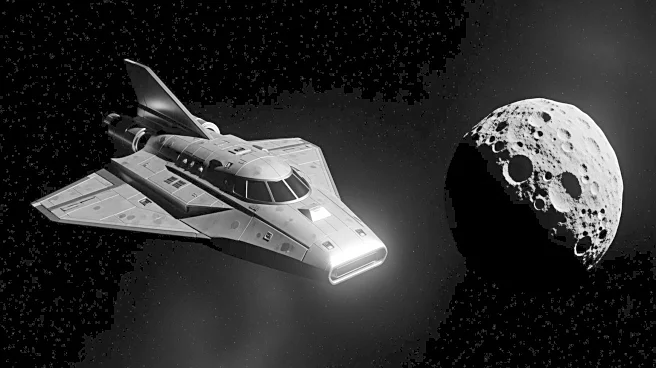
The European Space Agency (ESA) and Japan's JAXA are collaborating on the Ramses mission to study the asteroid Apophis, which will pass within 32,000 kilometers of Earth in 2029. This mission aims to observe how Earth's gravity affects the asteroid, providing
valuable data for planetary defense techniques. The collaboration involves launching the Ramses spacecraft to study Apophis' response to gravitational forces, which is crucial for developing asteroid deflection strategies.
Why It's Important?
The close approach of Apophis presents a unique opportunity to advance planetary defense techniques. Understanding how asteroids respond to gravitational forces is essential for developing methods to protect Earth from potential asteroid threats. The collaboration between ESA and JAXA highlights the importance of international cooperation in space exploration and planetary defense. The mission's findings could significantly enhance current understanding of asteroid deflection, contributing to global efforts to safeguard Earth from future asteroid impacts.
What's Next?
The Ramses mission is set to launch in the coming years, with ESA and JAXA working together to ensure its success. The mission will involve advanced technologies and scientific expertise to study Apophis' trajectory and behavior. The data collected will inform future planetary defense strategies and could lead to new insights into asteroid deflection techniques. As the mission progresses, it will serve as a model for international collaboration in addressing global challenges in space exploration and safety.