



What's Happening?
The CSIS Energy Security and Climate Change Program is set to host a virtual discussion on November 13, 2026, focusing on new research and emerging approaches to electricity transmission policy in the United States. The event will feature Dr. Julie Mulvaney
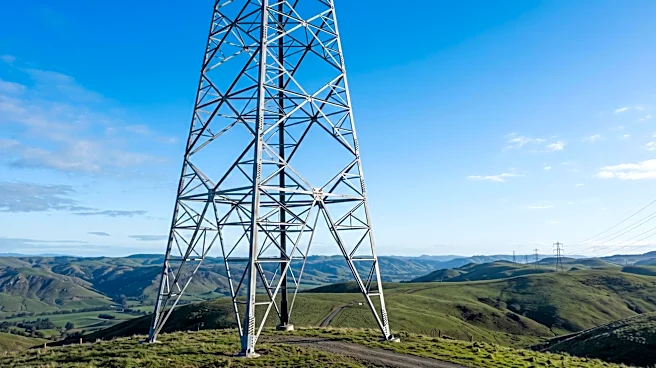
Kemp, a Research Scientist in the Energy Markets and Planning Department at Lawrence Berkeley National Laboratory, and will be moderated by Dr. Leslie Abrahams, Deputy Director and Senior Fellow of the CSIS Energy Security and Climate Change Program. The discussion will delve into Dr. Mulvaney Kemp’s recent research, including her 2025 Nature Communications article, “Electric transmission value and its drivers in United States power markets.” This paper explores the economic value of expanding transmission between regions, how extreme weather and unexpected system conditions influence this value, and the obstacles hindering the construction of economically beneficial infrastructure. The event is part of a series that brings together scholars and thought leaders to offer policymakers new perspectives on persistent challenges in transmission, supported by the Connected Grid Initiative.
Why It's Important?
This discussion is crucial for understanding the future of the U.S. electricity grid, particularly as the nation faces increasing demands and the impacts of climate change. The insights from Dr. Mulvaney Kemp’s research will directly inform transmission planning, investment strategies, and efforts to ensure electricity affordability and reliability across the country. Addressing the barriers to building essential transmission infrastructure is vital for integrating renewable energy sources, enhancing grid resilience against extreme weather events, and meeting growing energy demands. Policymakers, industry stakeholders, and the public stand to gain from a clearer understanding of the economic drivers and challenges in transmission expansion, which can lead to more effective policies and investments. The conversation will highlight the interplay of economics, engineering, and law in shaping the nation's energy future, impacting consumers through potential changes in electricity costs and service reliability.
What's Next?
The virtual discussion on November 13, 2026, will serve as a platform for disseminating critical research findings and fostering dialogue among experts and policymakers. Following the event, the insights shared are expected to contribute to ongoing policy debates and legislative efforts aimed at modernizing the U.S. electric grid. Stakeholders, including government agencies, utility companies, and energy developers, may use the research to refine their strategies for transmission development and investment. The series of discussions, of which this event is a part, aims to continuously provide new ideas and approaches to tackle transmission challenges. Future policy decisions regarding grid expansion, regulatory frameworks, and funding mechanisms could be influenced by the evidence and perspectives presented, potentially leading to legislative actions or new initiatives to accelerate grid improvements and enhance energy security.
Beyond the Headlines
The deeper implications of this discussion extend to the broader energy transition and national security. An efficient and resilient electricity grid is fundamental to achieving decarbonization goals by enabling the widespread integration of renewable energy. The economic value of transmission expansion, especially in the face of extreme weather, underscores the need for proactive infrastructure development rather than reactive measures. Legal and regulatory frameworks often lag behind technological advancements and economic necessities, creating significant hurdles for grid modernization. This event highlights the ethical imperative to ensure equitable access to reliable and affordable electricity, particularly as infrastructure costs are debated. Long-term shifts could include a more integrated national grid, increased inter-regional power sharing, and innovative financing models for large-scale energy projects, ultimately reshaping the energy landscape and reducing vulnerabilities to supply disruptions.