







What's Happening?
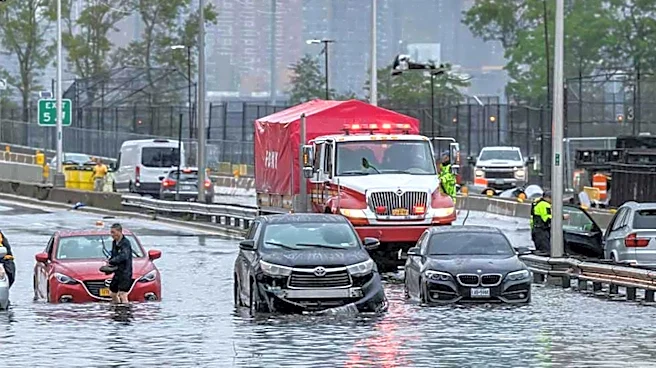
Paterson, New Jersey, experienced significant flash flooding on Sunday, leading to submerged vehicles and 15 rescues by the Paterson Fire Department. Mayor Andre Sayegh has reiterated his call for federal assistance to address the city's persistent flooding issues.
The flooding reached knee-high levels at intersections like 21st and Summer streets, with cars partially submerged. A similar situation occurred at 25th Street and 11th Avenue, where crews had to extract a vehicle from the flooded roadway. Mayor Sayegh emphasized that this is not an isolated incident and that without federal intervention, the city will continue to face these challenges. He highlighted the need for infrastructure improvements, particularly upgrading the aging sewer system, and supports legislation to penalize pollution, which often exacerbates flooding by clogging storm drains. The city has already undertaken sewer repairs under River Street, which previously experienced severe flooding, demonstrating the effectiveness of such investments.
Why It's Important?
The recurring flooding in Paterson underscores a critical infrastructure challenge facing many older U.S. cities. The call for federal aid by Mayor Sayegh highlights the financial burden and technical complexity of modernizing outdated urban infrastructure to withstand increasingly frequent and intense weather events. This situation impacts residents' safety, property, and daily lives, leading to significant economic disruptions from damaged vehicles and homes. For the federal government, it presents a policy dilemma: how to fund and prioritize infrastructure projects in vulnerable communities nationwide. The mayor's support for pollution penalties also points to the broader environmental and public health implications, as clogged drains not only worsen flooding but can also lead to contaminated water and other hazards. The success of the River Street sewer repair project serves as a model, suggesting that targeted investments can yield positive results, but also emphasizes the scale of investment required across the city and potentially other similar municipalities.
What's Next?
Mayor Sayegh will likely continue to lobby federal and state authorities for funding and support for Paterson's infrastructure projects. The city may explore additional local initiatives to mitigate flooding, such as stricter enforcement against pollution and public awareness campaigns regarding waste disposal. The discussion around legislation to penalize pollution could gain traction, potentially leading to new environmental regulations at the state or federal level. Furthermore, the federal government's response to Paterson's plea could set a precedent for how similar infrastructure crises in other U.S. cities are addressed. This could involve new federal funding programs, revised grant application processes, or a re-evaluation of national infrastructure priorities. The city will also need to assess the long-term effectiveness of current repair efforts and plan for future climate resilience strategies.
Beyond the Headlines
The chronic flooding in Paterson reveals deeper issues beyond immediate infrastructure needs, touching upon environmental justice and the equitable distribution of resources. Older, often lower-income urban areas frequently bear the brunt of climate change impacts due to aging infrastructure and historical underinvestment. The repeated calls for federal help highlight a systemic challenge where local governments, despite their best efforts, lack the resources to tackle problems of this magnitude independently. This situation could catalyze a broader national conversation about how to fund and implement large-scale climate adaptation projects in vulnerable communities. It also brings to light the interconnectedness of environmental policy, urban planning, and social equity, suggesting that solutions must be holistic, addressing not only physical infrastructure but also the socio-economic factors that exacerbate vulnerability to climate-related disasters.