



What's Happening?
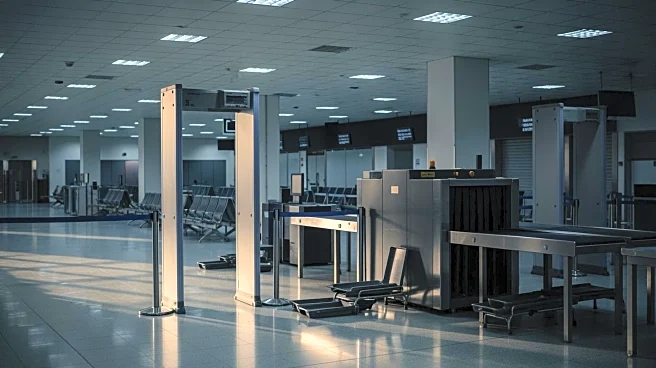
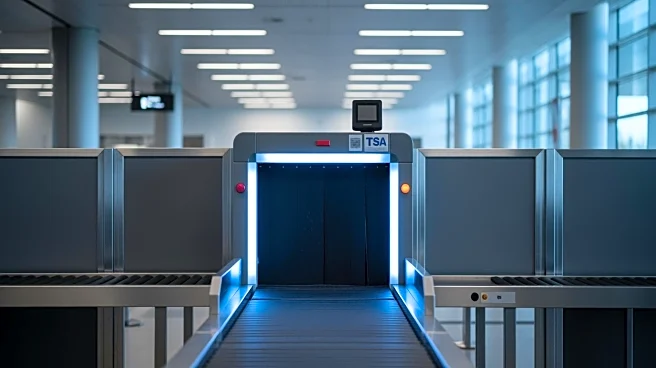
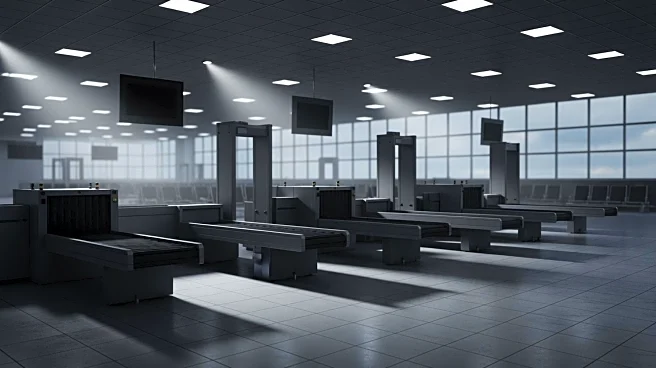
Travelers at major U.S. airports are experiencing significant delays, with security wait times reaching up to three hours due to a shortage of TSA workers. This situation arises from a partial government shutdown affecting the Department of Homeland Security
(DHS), which oversees the Transportation Security Administration (TSA). The shutdown is a result of a funding impasse in Congress, primarily over policies related to Immigration and Customs Enforcement (ICE) and Customs and Border Protection. As a result, TSA officers, deemed essential employees, are required to work without pay, leading to financial hardships and staffing shortages. The delays coincide with the start of the spring break travel period, exacerbating the situation for travelers. Airports like William P. Hobby in Houston and others across the country are advising passengers to arrive four to five hours before their flights to accommodate the extended wait times.
Why It's Important?
The current situation at U.S. airports highlights the broader implications of political stalemates on essential services. The TSA staffing shortages not only inconvenience travelers but also pose potential security risks. The financial strain on TSA workers, who are working without pay, could lead to increased absenteeism, further exacerbating the staffing crisis. This situation underscores the critical need for a resolution in Congress to ensure the smooth operation of national security services. The delays also have economic implications, potentially affecting airlines and the broader travel industry during a peak travel season. The use of TSA workers as leverage in political negotiations raises ethical concerns about the treatment of essential workers and the prioritization of public safety.
What's Next?
The resolution of the government shutdown and the associated funding impasse in Congress is crucial to alleviating the current TSA staffing shortages. Both the White House and Senate Democrats have been in negotiations, but a breakthrough has yet to be achieved. Airlines and travel industry stakeholders are likely to increase pressure on lawmakers to reach a deal, especially as the spring break travel season continues. If the shutdown persists, travelers may face ongoing disruptions, and the financial strain on TSA workers could worsen, potentially leading to further staffing challenges. The situation may also prompt discussions on the need for contingency plans to prevent similar disruptions in the future.