
What's Happening?
A multi-vehicle hit-and-run crash occurred early Friday morning on I-15 southbound near Jean, Nevada, resulting in five injuries and a significant diesel spill. Nevada Highway Patrol (NHP) initially responded
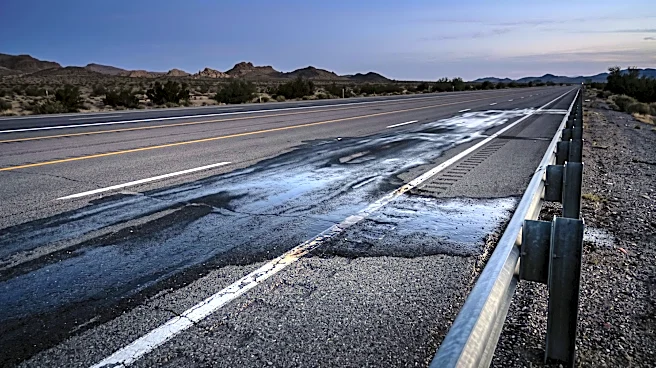
to a three-car collision at approximately 12:16 a.m. near mile marker 7. While emergency crews were securing the scene, a secondary hit-and-run collision took place at 12:36 a.m. An unidentified vehicle struck a Clark County Fire Department ambulance, a fire truck, and a parked Chevrolet Malibu. The driver of the striking vehicle fled the scene on foot into the surrounding desert area. Despite an extensive air and ground search involving NHP, the Las Vegas Metropolitan Police Department, and the California Highway Patrol, the suspect has not yet been apprehended. Five individuals were injured in the secondary collision and transported to area hospitals, with one patient airlifted due to severe injuries and four others taken by ground ambulances. All Clark County Fire Department personnel on the scene were reported uninjured. The southbound lanes of I-15 were closed for several hours for cleanup due to a large diesel spill from the damaged fire truck, with traffic diverted at the Jean exit off-ramp.
Why It's Important?
This incident highlights critical issues concerning road safety, emergency response protocols, and the challenges of apprehending suspects who flee accident scenes. The involvement of emergency vehicles in a secondary collision underscores the dangers faced by first responders and the need for enhanced safety measures at accident sites. The closure of a major interstate like I-15, a vital artery connecting Las Vegas and Southern California, causes significant disruption to transportation and commerce. Such closures can lead to substantial economic losses due to delayed freight, missed appointments, and increased travel times for commuters and tourists. The ongoing search for the suspect also raises concerns about public safety and the effectiveness of law enforcement in securing immediate accountability for dangerous driving incidents. The severity of injuries sustained by victims emphasizes the human cost of reckless behavior on roadways, prompting discussions on stricter penalties for hit-and-run offenses and impaired driving.
What's Next?
Authorities will continue their intensive search for the driver who fled the scene, utilizing all available resources, including drones and helicopters. The investigation will likely focus on identifying the vehicle and driver involved in the secondary collision, potentially through forensic evidence from the crash site and any available surveillance footage. Law enforcement agencies may issue public appeals for information to aid in the suspect's apprehension. Furthermore, this incident could prompt a review of safety procedures for emergency personnel operating on busy highways, potentially leading to new protocols or technologies to better protect first responders and accident victims. The affected individuals will continue to receive medical care, and the long-term impacts of their injuries will be assessed. Legal proceedings will commence once the suspect is identified and apprehended, with potential charges including hit-and-run, reckless endangerment, and assault with a deadly weapon, depending on the specifics of the incident and the extent of the victims' injuries.
Beyond the Headlines
The incident reflects a broader societal challenge of accountability on U.S. roads, particularly concerning hit-and-run incidents. The act of fleeing an accident scene not only complicates law enforcement efforts but also leaves victims without immediate assistance and recourse. This event could reignite public discourse on the psychological and legal motivations behind such evasive actions, and the need for more effective deterrents. It also touches upon the increasing prevalence of multi-vehicle accidents on congested highways, raising questions about driver education, enforcement of traffic laws, and infrastructure design. The diesel spill, while cleaned up, also points to environmental concerns associated with major traffic incidents, adding another layer of impact beyond immediate human injury and traffic disruption. The incident serves as a stark reminder of the unpredictable nature of road travel and the critical role of rapid and coordinated emergency response.