
What's Happening?
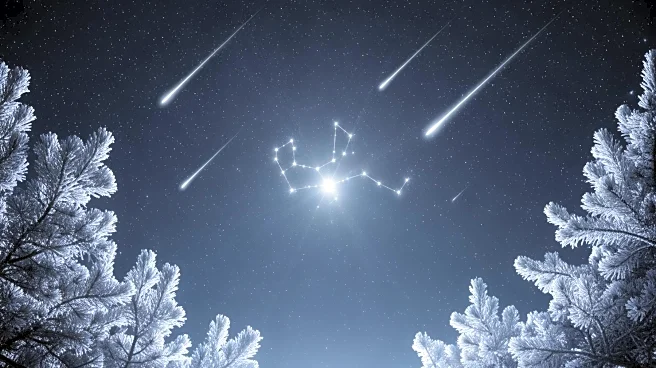
The Ursid meteor shower, an annual celestial event, is set to peak on the evening of December 21, 2025, continuing through the early hours of December 22. This meteor shower is associated with the Ursa
Minor constellation, specifically radiating from the star Kochab. The Ursids are typically less prominent than other meteor showers, such as the Geminids, with an expected rate of five to ten meteors per hour. This year, the event coincides with a new moon on December 20, providing darker skies that enhance visibility. The winter solstice, marking the longest night of the year in the Northern Hemisphere, also occurs during this period, offering an extended window for observation. Stargazers are advised to find a location with minimal light pollution and allow their eyes to adjust to the darkness for optimal viewing.
Why It's Important?
The alignment of the Ursid meteor shower with the winter solstice and a new moon presents a unique opportunity for astronomy enthusiasts and the general public to engage with a natural phenomenon. The event highlights the importance of preserving dark skies, free from light pollution, to fully appreciate such celestial displays. Additionally, the Ursids provide an educational moment to learn about meteor showers and their origins, in this case, debris from Comet 8P/Tuttle. This event can inspire interest in astronomy and science, encouraging public engagement with scientific topics and fostering a greater appreciation for the natural world.
What's Next?
Following the peak of the Ursid meteor shower, the meteors will continue to be visible until December 26, 2025. This extended period allows for multiple viewing opportunities, especially for those who may miss the peak night. As the event concludes, attention may shift to future astronomical events and the ongoing efforts to mitigate light pollution. Organizations and communities may use this occasion to advocate for policies that protect dark skies, ensuring that such natural spectacles remain accessible to future generations.
Beyond the Headlines
The Ursid meteor shower, while a relatively minor event in the astronomical calendar, underscores broader themes of environmental conservation and public science education. The need to reduce light pollution is not only crucial for astronomical observations but also for ecological health, as excessive artificial light can disrupt wildlife and human circadian rhythms. This event also serves as a reminder of the interconnectedness of natural phenomena and the importance of maintaining a balance between technological advancement and environmental stewardship.