

What's Happening?
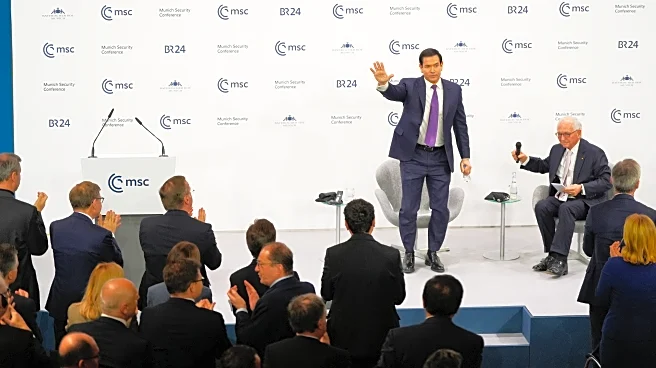
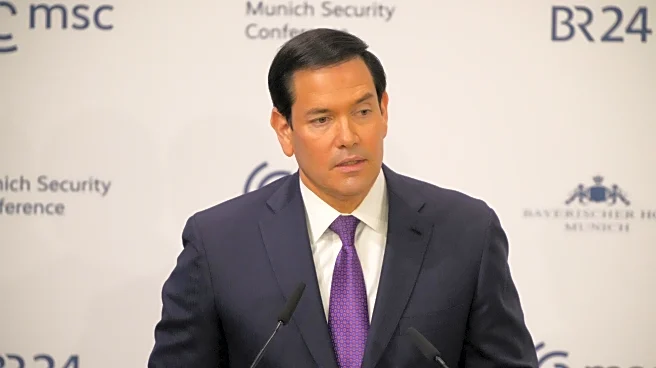
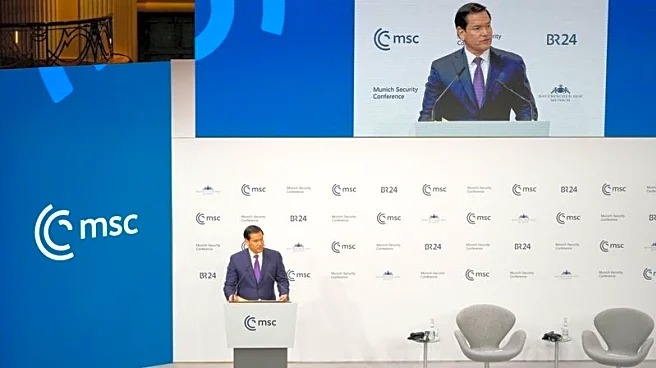
At the Munich Security Conference, Syria's Foreign Minister Asaad Al-Shaibani, along with a Syrian delegation that included Kurdish members of the Syrian Democratic Forces (SDF), engaged in significant diplomatic discussions. These talks included high-level
meetings with U.S. Secretary of State Marco Rubio and Saudi Foreign Minister Prince Faisal bin Farhan. The discussions focused on regional developments, bilateral relations, and the integration of Kurdish-led forces into Syrian state institutions. The Syrian delegation's presence at the conference marks a shift from previous tensions with the SDF, showcasing a new phase of cooperation and unity. Additionally, Syria and Israel have been involved in negotiations, under U.S. pressure, to establish an intelligence-sharing mechanism as part of a potential security agreement.
Why It's Important?
The developments at the Munich Security Conference highlight Syria's efforts to project a unified front and engage in international diplomacy. This shift could have significant implications for regional stability, particularly in the context of Syria's relations with Israel and the integration of Kurdish forces. The involvement of major powers like the U.S. and Saudi Arabia indicates a potential realignment of alliances and interests in the Middle East. For the U.S., fostering stability in Syria aligns with broader geopolitical goals, while Saudi Arabia's interest in investing in Syria suggests economic opportunities. The outcome of these diplomatic efforts could influence the balance of power in the region and impact the lives of millions affected by the Syrian conflict.
What's Next?
The next steps involve monitoring the progress of the intelligence-sharing mechanism between Syria and Israel and the integration of Kurdish forces into Syrian institutions. The international community will likely watch closely to see if Syria can maintain its newfound unity and whether these diplomatic efforts translate into tangible peace and stability. Potential challenges include internal opposition within Syria and the reactions of neighboring countries like Turkey, which has historically been at odds with the SDF. The success of these initiatives could pave the way for further diplomatic engagements and economic investments in Syria.