
What's Happening?
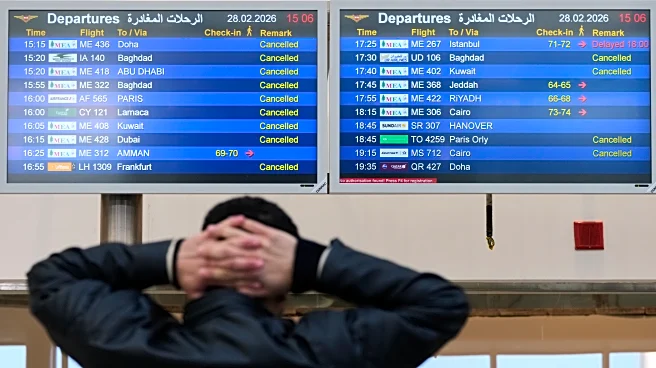
The 82nd Whitney Biennial at the Whitney Museum of American Art in New York is set to open this weekend, showcasing a diverse array of contemporary art. This event coincides with escalating tensions in the Middle East, where a conflict involving Iran,
Israel, and the United States is impacting the region's cultural and tourism sectors. The Art Newspaper's Middle East correspondent, Melissa Gronlund, discusses the implications of the conflict on the Persian Gulf's art and culture scene. Additionally, a significant art discovery has been made at the Rijksmuseum in Amsterdam, where a painting previously thought to be a copy has been authenticated as an original work by Rembrandt. The painting, 'The Vision of Zacharias in the Temple' (1633), is now on display, following research led by Jonathan Bikker, the museum's curator of 17th-century Dutch paintings.
Why It's Important?
The Whitney Biennial is a major event in the art world, providing a platform for contemporary artists to gain international recognition. Its opening during a time of geopolitical tension highlights the intersection of art and global events. The conflict in the Middle East could have significant repercussions for the region's cultural investments, potentially affecting tourism and international art exchanges. Meanwhile, the authentication of a Rembrandt painting underscores the ongoing importance of art historical research and its ability to reshape our understanding of cultural heritage. These developments reflect the dynamic interplay between art, politics, and history, influencing both cultural institutions and public engagement with the arts.
What's Next?
As the Whitney Biennial opens, it will be interesting to observe how the art community responds to the current geopolitical climate. The conflict in the Middle East may prompt discussions on the role of art in times of crisis and its potential to foster dialogue and understanding. The newly authenticated Rembrandt painting is likely to attract significant attention from art historians and the public, potentially leading to further research and exhibitions focused on the Dutch master's work. The ongoing situation in the Middle East will continue to be monitored, with potential impacts on cultural diplomacy and international relations.