

What's Happening?
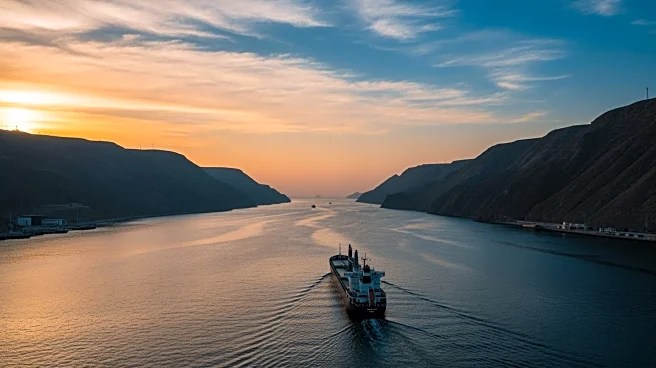
China is currently in discussions with Iran to secure safe passage for its crude oil and liquefied natural gas vessels through the Strait of Hormuz. This development comes as the conflict involving the U.S., Israel, and Iran intensifies, leading to significant
disruptions in this critical shipping route. The Strait of Hormuz is a vital passageway for global oil and gas supplies, and the ongoing conflict has nearly shut it down, affecting the flow of these resources worldwide. China, which maintains friendly relations with Iran and heavily relies on Middle Eastern oil supplies, is pressing Tehran to allow its vessels to pass safely. The situation has led to a significant increase in crude oil prices, with a rise of over 15% since the conflict began. The disruption has also caused a dramatic reduction in the number of crude tanker transits through the strait.
Why It's Important?
The negotiations between China and Iran are crucial as they could potentially stabilize the global oil and gas markets, which have been severely affected by the conflict. The Strait of Hormuz is a strategic chokepoint, and any prolonged disruption could lead to significant economic consequences worldwide, including increased energy prices and inflation risks. China's involvement highlights its strategic interest in maintaining stable energy supplies, given that it sources about 45% of its oil through this route. The outcome of these talks could influence global energy security and economic stability, particularly for countries heavily dependent on Middle Eastern oil.
What's Next?
If successful, the talks between China and Iran could lead to a resumption of more regular shipping activities through the Strait of Hormuz, potentially calming the global markets. However, the ongoing conflict poses a continuous threat to the stability of this passageway. Major economies are likely to monitor the situation closely, as any escalation could further destabilize global markets. The international community may also seek diplomatic solutions to ensure the security of this critical shipping route.