
What's Happening?
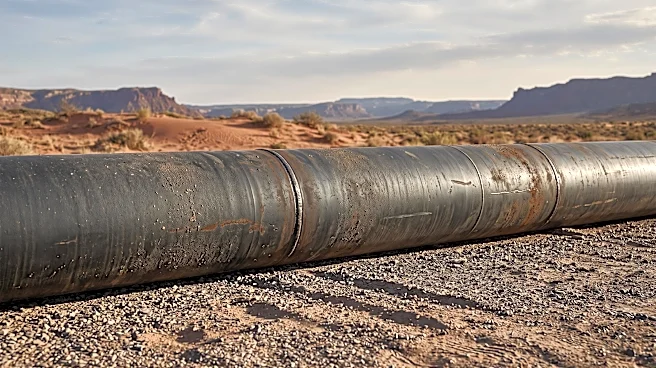
The federal government is currently reviewing a proposal for the Western Gateway Pipeline, an 887-mile fuel pipeline designed to transport gasoline and diesel from Texas to Buckeye, Arizona. This project
would traverse public lands in New Mexico and Arizona, necessitating an assessment by the Bureau of Land Management (BLM) to determine its potential environmental impacts. The pipeline's proposed route begins in Borger, Texas, extends to El Paso, and concludes in Buckeye, where it would connect with existing pipelines that move fuel from Illinois refineries to California. The BLM has initiated a public comment period, which is open until December 17, and will also host online meetings on December 1 and 2 to gather feedback. The project aims to enhance fuel supply stability in the Western United States and is expected to generate construction jobs.
Why It's Important?
The Western Gateway Pipeline project holds significant implications for the energy infrastructure and economy of the Western U.S. By potentially stabilizing fuel supplies, it could mitigate price volatility and ensure more reliable access to gasoline and diesel for consumers and businesses in New Mexico, Arizona, and California. The creation of construction jobs associated with the pipeline's development would provide economic benefits to the regions along its route. However, the project's passage through public lands raises environmental concerns, which the BLM's review process is intended to address. The balance between energy security, economic development, and environmental protection will be a key factor in the project's approval and its long-term impact on the affected states.
What's Next?
The immediate next steps involve the ongoing public comment period, which concludes on December 17, and the scheduled online public meetings on December 1 and 2. These forums will allow stakeholders, environmental groups, and the general public to voice their concerns and provide input on the proposed pipeline. Following the public consultation, the Bureau of Land Management will continue its assessment of the project's potential effects on public land. The outcome of this review will determine whether the Western Gateway Pipeline receives federal approval to proceed with construction. Future developments will likely include further environmental impact assessments and potential adjustments to the project plan based on public feedback and regulatory findings.
Beyond the Headlines
The proposed Western Gateway Pipeline underscores the ongoing tension between energy demands and environmental conservation in the United States. While proponents emphasize the need for stable fuel supplies and economic growth through job creation, environmental advocates will likely scrutinize the project's potential ecological footprint, particularly its impact on public lands and sensitive ecosystems in New Mexico and Arizona. This project is part of a broader national discussion about energy independence, infrastructure development, and the transition to cleaner energy sources. The decision on this pipeline could set precedents for future energy projects, influencing how the federal government balances economic imperatives with environmental stewardship and community concerns.