


What's Happening?
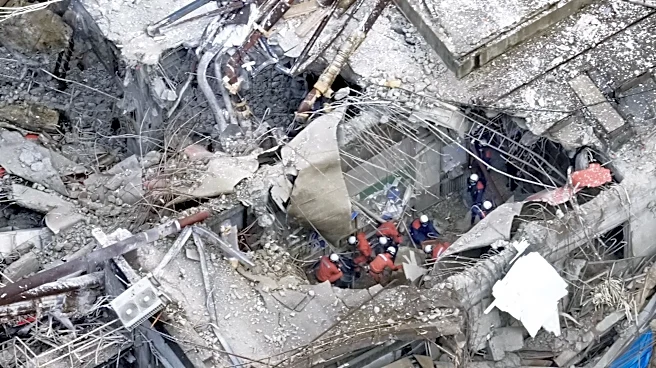
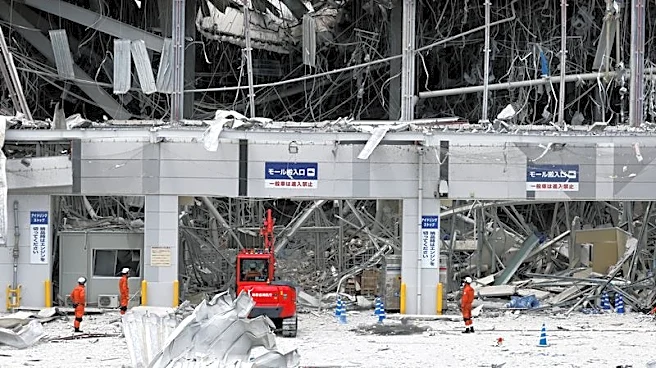
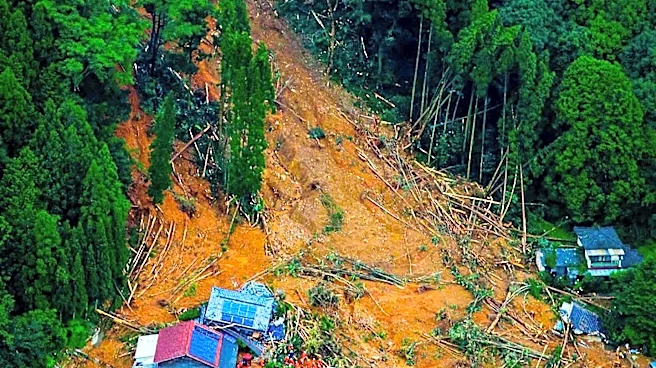
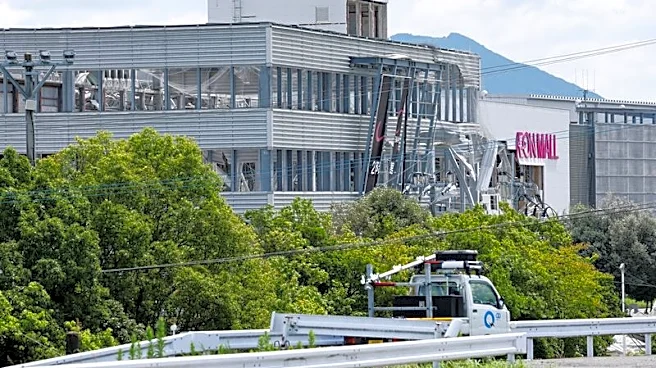
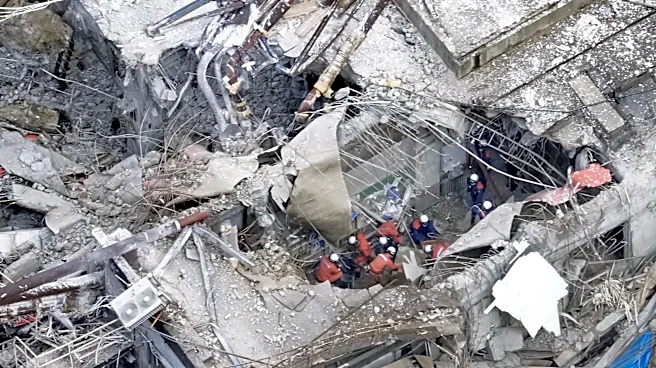
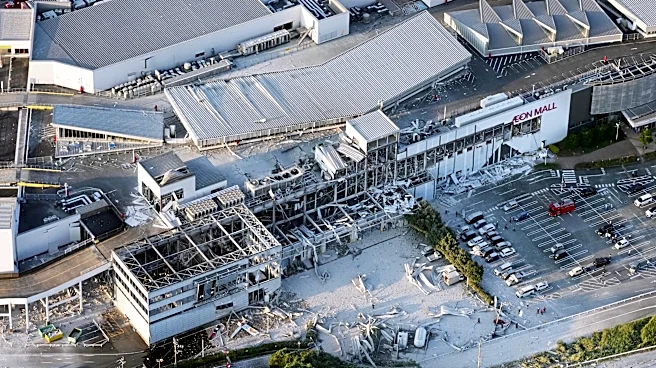
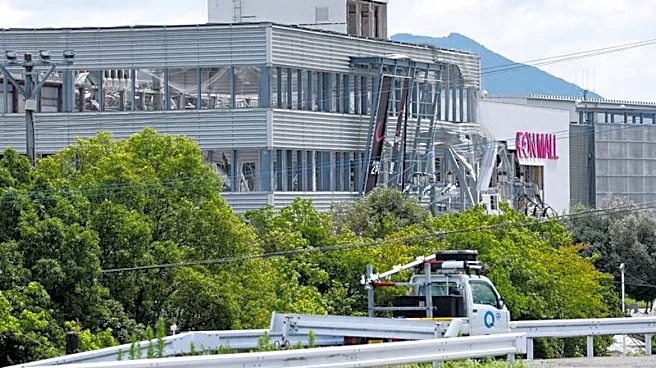
A magnitude 6.8 earthquake struck southwestern Japan, causing significant structural damage and trapping people inside a shopping mall. The earthquake occurred near Kumamoto on Kyushu island, a region known for its seismic activity due to its location
at the junction of several tectonic plates. The U.S. Geological Survey described the event as 'shallow strike-slip faulting,' with the rupture occurring at a depth of 10 kilometers. This type of faulting, combined with the shallow depth, concentrated the earthquake's energy near the surface, leading to extensive damage. Despite a brief tsunami warning, no significant tsunami was generated as the rupture occurred inland.
Why It's Important?
Japan's location on active tectonic plate boundaries makes it one of the most seismically active countries in the world, experiencing around 1,500 earthquakes annually. The country's infrastructure and emergency response systems are designed to mitigate the impact of such events, drawing lessons from past disasters like the 2011 Tohoku earthquake and tsunami. The recent earthquake underscores the importance of continued investment in earthquake preparedness and early warning systems. It also highlights the need for ongoing research into intraplate earthquakes, which occur away from plate boundaries and are less understood.
What's Next?
In the aftermath of the earthquake, search-and-rescue operations are underway, with efforts focused on reaching those trapped in collapsed structures. Japan's robust early warning systems and infrastructure investments are expected to minimize casualties and damage. However, the event serves as a reminder of the constant threat posed by seismic activity in the region. Scientists will continue to study the earthquake to better understand intraplate seismic events and improve predictive models. The government and local authorities will likely review and update disaster preparedness plans to enhance resilience against future earthquakes.
Beyond the Headlines
The earthquake raises questions about the long-term sustainability of living in seismically active regions. It highlights the ethical considerations of urban planning and development in areas prone to natural disasters. The event also emphasizes the importance of international collaboration in sharing knowledge and technology to improve earthquake preparedness and response. As climate change and urbanization increase the vulnerability of populations to natural disasters, comprehensive strategies that integrate scientific research, policy-making, and community engagement are essential.