
What's Happening?
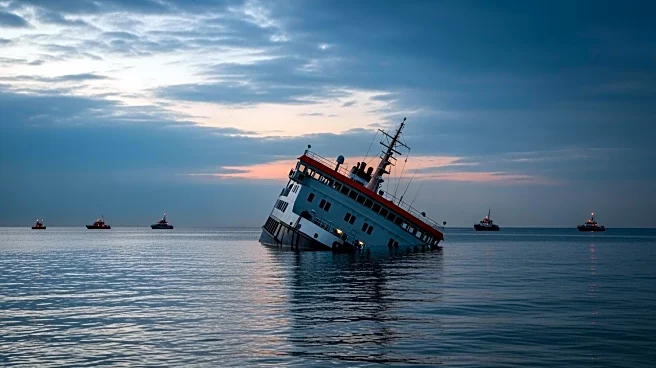
A tragic incident occurred off the coast of the Philippines when a ferry carrying over 300 people capsized. The vessel, which was transporting 332 passengers and 27 crew members, reportedly encountered
technical difficulties and sank shortly after midnight. As a result, at least 15 individuals have been confirmed dead, and several others remain missing. Rescue operations have been underway, with hundreds of passengers being successfully rescued from the waters. The incident highlights the ongoing challenges faced by maritime transportation in the region, where safety standards and vessel maintenance are critical concerns.
Why It's Important?
This incident underscores the significant safety challenges in maritime transport, particularly in regions like Southeast Asia where ferries are a common mode of transportation. The loss of life and the number of missing individuals highlight the potential risks associated with ferry travel, especially when technical issues arise. The event may prompt a reevaluation of safety protocols and maintenance standards for ferries, not only in the Philippines but potentially in other countries with similar transportation infrastructures. The tragedy also raises questions about the adequacy of emergency response measures and the preparedness of crew members to handle such crises.
What's Next?
In the aftermath of the ferry capsizing, there will likely be investigations into the cause of the technical problems that led to the sinking. Authorities may conduct thorough inspections of similar vessels to prevent future incidents. Additionally, there could be calls for stricter regulations and oversight of ferry operations to enhance passenger safety. The incident may also lead to increased training for crew members to better manage emergencies. Families of the victims and those affected by the tragedy may seek accountability and compensation, potentially leading to legal actions against the ferry operators.