






What's Happening?
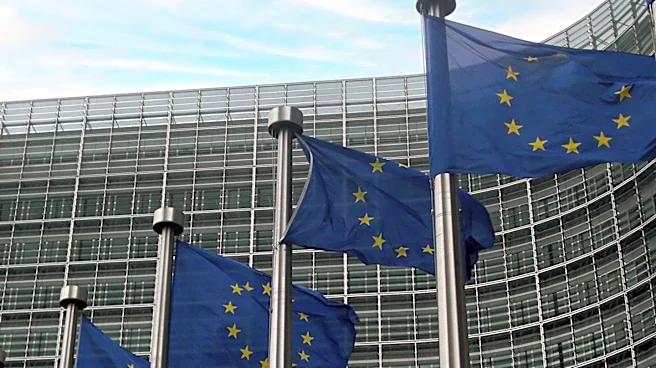
The European Union has implemented new regulations requiring companies to label AI-generated content, including deepfakes, to combat disinformation. This move is part of a broader effort to ensure transparency and maintain public trust in digital content.
The rules, which came into effect on Sunday, mandate that any professionally created AI content must be clearly labeled. This includes text, images, videos, and sounds that are generated or manipulated by AI. The EU's guidelines aim to help citizens distinguish between real and synthetic content, thereby preserving their ability to trust what they see, hear, and read. Major tech companies like TikTok, Meta, and Google have already started labeling AI-generated content in anticipation of these rules.
Why It's Important?
The EU's decision to enforce labeling of AI-generated content is significant as it addresses growing concerns about the spread of disinformation through advanced technologies like deepfakes. By requiring transparency, the EU aims to protect the integrity of information and prevent the manipulation of public opinion. This move could set a precedent for other regions, potentially influencing global standards for AI transparency. The regulations also highlight the challenges tech companies face in balancing innovation with ethical responsibilities. As AI technologies become more sophisticated, the need for clear guidelines and accountability becomes crucial to prevent misuse and maintain public trust.
What's Next?
Companies have until December 2026 to fully comply with the new regulations, with potential fines for non-compliance. The EU's approach may prompt other countries to consider similar measures, leading to a more standardized global framework for AI content labeling. As the technology evolves, ongoing dialogue between regulators, tech companies, and civil society will be essential to address emerging challenges and ensure that AI is used responsibly.