






What's Happening?
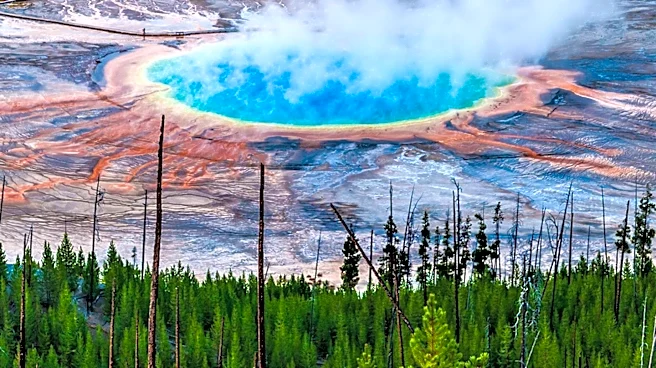
Yellowstone National Park will introduce a new entrance fee of $100 per person for non-U.S. residents aged 16 and above, effective January 1, 2026. This new charge applies to designated national parks, including Yellowstone. The park continues to offer
various tour packages, such as those departing from Los Angeles, which highlight attractions like Elk Antler Arches Park, Seven Magic Mountains, the Great Salt Lake, and Grand Teton National Park. Some tour packages also provide opportunities for free cabin upgrades within Yellowstone National Park for bookings made 31 days in advance, subject to availability. These upgrades are offered on specific departure days and during certain periods, for instance, from May to October.
Why It's Important?
This new fee for non-U.S. residents could significantly impact international tourism to Yellowstone National Park and other designated national parks. The additional cost may deter some international visitors, potentially leading to a decrease in foreign tourist numbers. This could affect local economies that rely on tourism, including tour operators, hotels, and related businesses in gateway communities surrounding the parks. Conversely, the revenue generated from these fees could be used for park maintenance, infrastructure improvements, and conservation efforts, which are crucial for preserving these natural treasures. The policy also raises questions about equitable access to national parks for international visitors compared to domestic tourists.
What's Next?
As the January 1, 2026, implementation date approaches, tour operators and travel agencies catering to international visitors will likely adjust their pricing and marketing strategies to account for the new fee. Potential visitors from outside the U.S. will need to factor this additional cost into their travel budgets. It is also possible that other national parks may adopt similar fee structures for non-U.S. residents, creating a broader impact on international tourism across the U.S. national park system. The National Park Service may also release further details or clarifications regarding the implementation and scope of this new fee.
Beyond the Headlines
The introduction of a differential fee for non-U.S. residents highlights a broader discussion about funding for national parks and the balance between accessibility and resource management. While the fee aims to generate revenue for park upkeep, it also touches upon the principle of universal access to natural heritage sites. This policy could spark debates about national identity, global tourism, and the economic value placed on natural landscapes. It may also lead to increased scrutiny of how these funds are utilized and whether they genuinely contribute to enhancing the visitor experience and preserving the parks for future generations.