


What's Happening?
Representative Emilia Sykes (D) has introduced H.R. 10900, known as the 'Law Enforcement Accountability for Plate Reader Abuse Act.' This bill mandates that state and local governments receiving federal law enforcement grants from the Department of Justice
report any misuse of automated license plate readers (ALPRs) by their police officers. The reporting requirements, which would begin in the first fiscal year after the law's enactment, include incidents where officers accessed ALPR data in violation of state or local law or agency policy, and any convictions of officers for offenses involving ALPR use. Governments would also need to report corrective actions taken against involved officers, such as suspension or termination. Failure to submit these reports would result in a 15% reduction in next-year funding from the Byrne and COPS grant programs, while failure to take corrective action would lead to a 10% reduction. The bill also requires the Attorney General to post submitted reports online for public access and allows the Justice Department’s Inspector General to audit compliance.
Why It's Important?
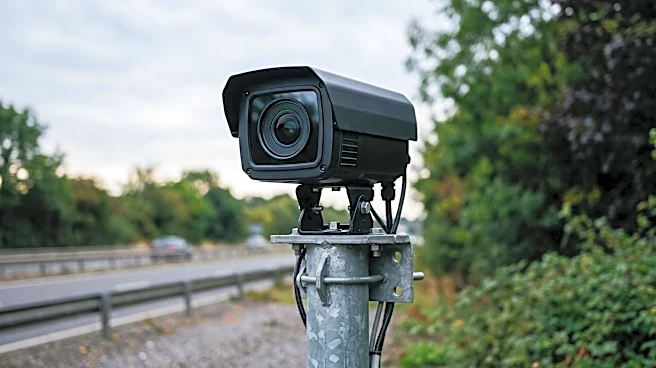
This legislation is significant for several reasons. It aims to increase transparency and accountability within law enforcement regarding the use of advanced surveillance technology. Automated license plate readers, while useful for crime solving, have raised privacy concerns due to their ability to collect and store vast amounts of location data on individuals. By requiring reporting on misuse and imposing financial penalties for non-compliance, the bill seeks to deter unauthorized access and use of this sensitive data. This could lead to a more standardized approach to ALPR oversight across different jurisdictions, potentially safeguarding civil liberties while still allowing law enforcement to utilize the technology responsibly. The public disclosure of reports would also empower communities to monitor their local law enforcement agencies' adherence to privacy standards and hold them accountable.
What's Next?
H.R. 10900, the 'Law Enforcement Accountability for Plate Reader Abuse Act,' was received on October 22, 2026, and currently has no cosponsors. The next steps involve the bill potentially gaining cosponsors and moving through the legislative process in the House of Representatives. If it passes the House, it would then proceed to the Senate for consideration. Should it become law, state and local governments would need to establish robust internal reporting mechanisms and ensure their officers are adequately trained on ALPR usage policies to avoid federal funding reductions. Law enforcement agencies would also face increased scrutiny from both the Department of Justice and the public regarding their ALPR practices. The Attorney General would be responsible for implementing the reporting system and making the data publicly available.
Beyond the Headlines
The introduction of this bill highlights a growing tension between technological advancements in surveillance and the protection of individual privacy rights. ALPRs, by continuously tracking vehicle movements, create a detailed mosaic of individuals' lives, raising questions about the scope of government surveillance in a democratic society. This legislation could set a precedent for how other emerging surveillance technologies are regulated, emphasizing accountability and transparency as core principles. It also underscores the ongoing debate about federal oversight of local law enforcement practices, particularly when federal funding is involved. The bill's focus on 'covered offenses' for ALPR misuse, which includes stalking, identity theft, and unlawful tracking, reflects a recognition of the potential for these tools to be exploited for personal or malicious purposes, beyond their intended law enforcement applications.