






What's Happening?
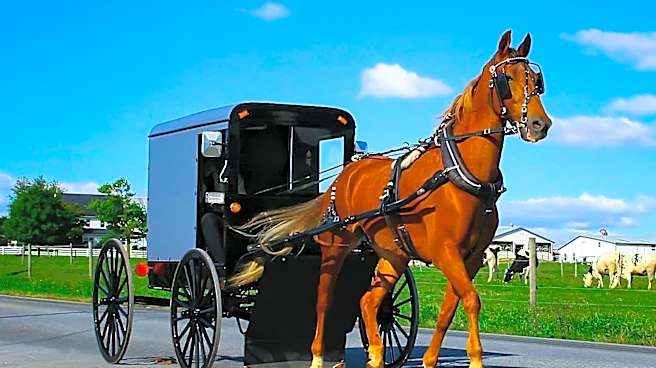
Amid the nation's worst measles outbreak in 35 years, particularly centered in Lancaster County, Pennsylvania, some Amish and conservative Mennonite communities are demonstrating a new openness to vaccination. While historically having lower vaccination rates
due to cultural practices rather than religious doctrine, the severity of the current outbreak is prompting a shift in attitudes. Union Community Care, a non-profit, has held small-scale vaccine clinics, administering approximately 450 measles shots to Plain populations and offering earlier vaccinations for infants as advised by health experts. The outbreak has underscored the interconnectedness of Plain and wider 'English' populations, as the virus spreads easily, affecting both vaccinated and unvaccinated individuals.
Why It's Important?
This development is crucial for public health, as the measles virus, once considered eliminated from the U.S., is highly contagious and can lead to severe complications and even death. The increased acceptance of vaccines within these communities is vital for curbing the spread of the disease and protecting vulnerable populations. Declining childhood vaccination rates across the general public, coupled with historically lower rates in Plain communities, have created conditions ripe for outbreaks. The willingness of some Amish and Mennonite individuals to get vaccinated, even after initial hesitancy, demonstrates the powerful impact of direct experience with disease and targeted, trust-building public health efforts. This shift could significantly contribute to re-establishing herd immunity in affected areas.
What's Next?
Public health officials and community leaders will likely continue their efforts to build trust and encourage vaccination within Plain communities. The strategy emphasizes encouragement over aggressive mandates, recognizing the importance of long-term relationships. Clinics offering accessible vaccination services, potentially including earlier infant vaccinations, are expected to continue. The ongoing measles outbreak will serve as a critical test case for these community-based public health interventions. The situation may also influence broader discussions about vaccine exemptions, as a cluster of Amish schools in New York is seeking Supreme Court intervention for religious exemptions, a stance not universally supported by Amish leadership. The long-term success will depend on sustained engagement and education.
Beyond the Headlines
The evolving attitudes towards vaccines within Amish communities highlight the complex interplay of culture, tradition, and public health. While often perceived as isolated, these communities are deeply interconnected with the wider society, making their health choices impactful for everyone. The initial hesitancy, often rooted in habit and a belief in natural processes rather than anti-vaccine ideology, underscores the need for nuanced communication strategies. The outbreak also brings to light the broader issue of declining vaccination rates across the U.S. and the erosion of herd immunity, making all communities more susceptible to preventable diseases. This situation serves as a powerful reminder that public health is a shared responsibility, requiring collective action and understanding across diverse populations.