






What's Happening?
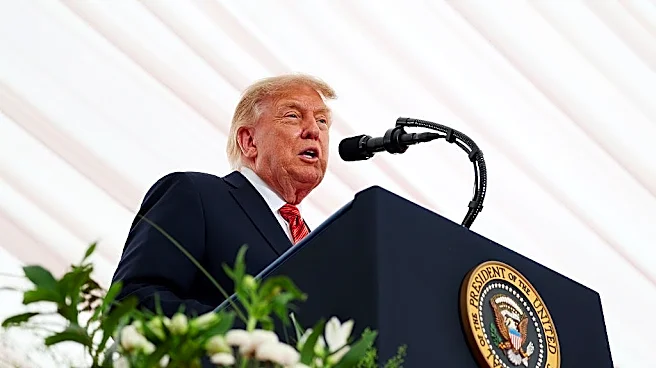
President Trump has signed the Doug LaMalfa Federal Disaster Tax Relief Certainty Act (H.R. 5366) into law. This bipartisan legislation, introduced by Representatives Greg Steube (FL-17), Mike Thompson (CA-04), and Jimmy Panetta (CA-19), aims to provide
fairer tax treatment for Americans rebuilding after various disasters, including wildfires, hurricanes, and floods. The bill is named in honor of the late Representative Doug LaMalfa (CA-01), who was a strong advocate for disaster tax relief. Previously, taxpayers affected by federally declared disasters could only deduct personal casualty losses if they itemized and if those losses exceeded 10 percent of their adjusted gross income. The new law allows disaster victims to deduct qualified losses exceeding $500 per disaster without itemizing and removes the 10 percent adjusted gross income threshold. It also extends an exclusion from gross income for wildfire relief payments, ensuring survivors are not taxed on compensation intended for rebuilding. The legislation was approved unanimously by the Ways and Means Committee and passed both the House of Representatives and the Senate with unanimous consent.
Why It's Important?
This legislation is crucial for disaster victims across the United States, offering much-needed financial relief and certainty during challenging times. By simplifying the process for deducting casualty losses and removing the adjusted gross income threshold, the law ensures that more individuals and families can retain a greater portion of their recovery resources. This directly impacts their ability to rebuild homes, businesses, and communities without facing an unexpected tax burden on assistance received. The extension of the exclusion for wildfire relief payments is particularly significant for regions prone to such disasters, like California, where many have lost everything. The Joint Committee on Taxation estimates that this law will provide $408 million in tax relief over the 2026 to 2036 period, demonstrating its substantial economic impact on affected populations. This bipartisan effort underscores a collective recognition of the financial hardships faced by disaster survivors and aims to alleviate some of that burden, fostering quicker recovery and economic stability in affected areas.
What's Next?
The Doug LaMalfa Federal Disaster Tax Relief Certainty Act will continue to provide tax benefits for disasters occurring prior to January 1, 2027. This extends the more generous treatment of personal casualty losses, which previously expired for disasters after July 4, 2025. Additionally, the exclusion of wildfire relief payments from taxable income will apply regardless of when they are received, as long as the wildfire disaster declaration occurred between December 31, 2014, and January 1, 2027. This extended timeframe ensures that a broader range of taxpayers affected by past and future disasters within this period will be eligible for these tax benefits. The implementation of these provisions will likely involve the IRS updating its guidelines and forms to reflect the changes, and tax preparers will need to be aware of the new rules to properly advise their clients. The long-term impact will be monitored through the estimated $408 million in tax relief over the next decade, providing a measure of the legislation's effectiveness in supporting disaster recovery.
Beyond the Headlines
Beyond the immediate financial relief, this act signifies a broader shift in how the U.S. government addresses the aftermath of natural disasters. By making tax relief more accessible and comprehensive, it acknowledges the profound and often long-lasting economic disruption that disasters inflict on individuals and communities. The bipartisan support for this legislation highlights a consensus on the need for robust federal assistance in disaster recovery, transcending political divides. Ethically, it reinforces the principle that those who have lost everything due to unforeseen natural events should not be further burdened by taxation on their recovery efforts. Culturally, it can foster a sense of security and resilience within disaster-prone regions, knowing that federal support is in place to aid their rebuilding process. This law sets a precedent for future disaster relief efforts, potentially influencing how similar challenges are addressed in the face of increasing climate-related events and their economic consequences.