









What's Happening?
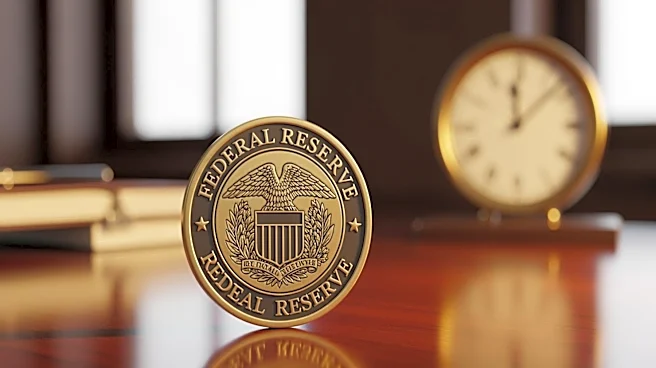
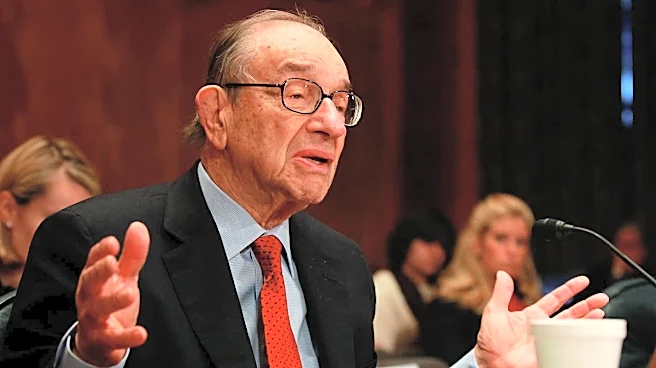
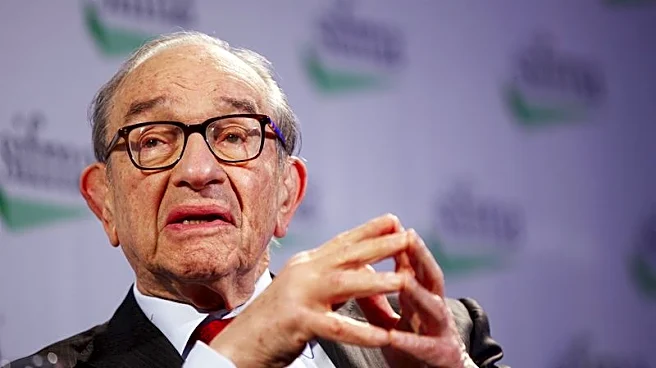
Alan Greenspan, who served as the chairman of the Federal Reserve under four U.S. presidents, has died at the age of 100. His wife, Andrea Mitchell, confirmed that Greenspan passed away at his home due to complications from Parkinson's Disease. Greenspan's
tenure at the Federal Reserve was marked by significant economic events, including the 1987 stock market crash and the dot-com bubble. He was known for his cryptic economic commentary and his role in the Great Moderation, a period of economic stability. However, his legacy is also tied to the 2008 financial crisis, with critics pointing to his 'loose money' policies as a contributing factor.
Why It's Important?
Greenspan's death marks the end of an era for the Federal Reserve and the broader economic landscape. His policies and leadership style have had a lasting impact on U.S. monetary policy and economic theory. While he is credited with contributing to a period of economic stability, his critics argue that his policies laid the groundwork for the 2008 financial crisis. His approach to market regulation and interest rates continues to influence current economic policy debates. Greenspan's legacy serves as a cautionary tale about the balance between market freedom and regulatory oversight.
What's Next?
The Federal Reserve and economic policymakers may reflect on Greenspan's tenure as they navigate current economic challenges. His death could prompt renewed discussions on the role of the Federal Reserve in preventing financial crises and the importance of transparency in monetary policy. As the U.S. economy faces new challenges, including inflation and market volatility, Greenspan's legacy will likely be revisited in the context of current economic strategies.
Beyond the Headlines
Greenspan's influence extended beyond economics into cultural and political realms. His relationship with novelist Ayn Rand and his advocacy for market efficiency have been subjects of interest. His tenure highlighted the complexities of economic forecasting and the unpredictable nature of human behavior in markets. Greenspan's life and career offer insights into the evolving role of central banks in a globalized economy.