



What's Happening?
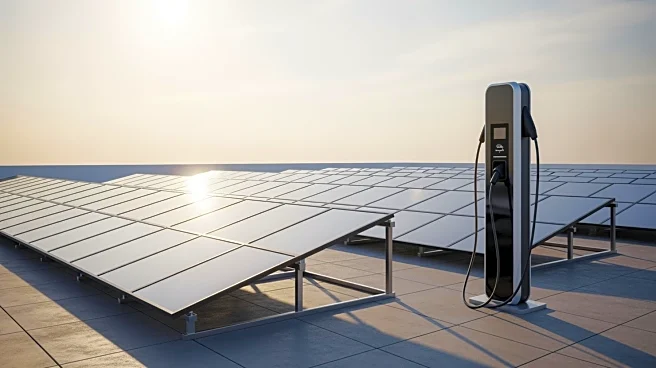
A recent study by economists at the University of Maryland has examined the impact of rooftop solar and electric vehicles (EVs) on electricity costs. The research, led by Joshua Linn, highlights a cost shift from households with solar panels to those
without. The study found that rooftop solar adoption has led to a 2.35% decrease in utility revenues, prompting a 1.48% increase in customer rates. This shift disproportionately affects low-income households without solar, while high-income households benefit from cost savings. Conversely, the adoption of EVs has resulted in a 0.44% increase in utility revenue and a 0.23% decrease in consumer costs, benefiting all consumers. The study emphasizes the need for policymakers to understand these cost shifts when crafting energy policies.
Why It's Important?
The findings of this study are significant as they highlight the economic implications of renewable energy adoption on different income groups. The cost shift associated with rooftop solar could exacerbate economic disparities, as low-income households bear the brunt of increased electricity rates. This underscores the importance of equitable energy policies that consider the financial impact on all consumers. Additionally, the positive impact of EVs on electricity costs suggests that promoting EV adoption could be a viable strategy for reducing overall energy expenses. The study's insights could influence future energy policies and utility company strategies, potentially affecting millions of consumers across the U.S.
What's Next?
As the market share for rooftop solar and EVs continues to grow, the effects on electricity costs are likely to become more pronounced. Policymakers may need to consider regulatory measures to mitigate the financial burden on low-income households. Utility companies might also adjust their strategies to accommodate the increasing adoption of renewable energy technologies. The study's authors plan to revise their paper for peer-reviewed publication, which could further inform policy discussions. Stakeholders, including environmental advocates and utility companies, are expected to engage in ongoing debates about the best approaches to balance renewable energy adoption with economic equity.