





What's Happening?
Vedra Chandler, a new doctoral student in Rutgers–Camden's public affairs program, is researching how arts and cultural investment can drive economic development and community revitalization in cities like Camden. Having grown up in Camden and experienced
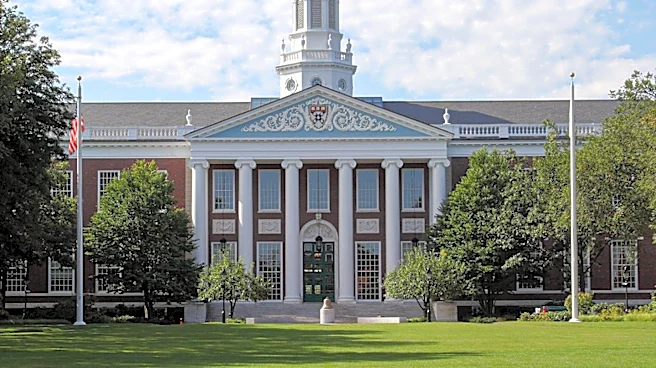
diverse environments from Harvard to performing with Cirque du Soleil, Chandler is deeply invested in her hometown's future. Her research is motivated by her observations of the economic opportunities generated by arts productions and her desire to see similar benefits in Camden. She aims to understand how intentional investment in the arts can serve as a catalyst for broader development and growth, fostering economic opportunities, civic pride, and a shared sense of belonging among residents.
Why It's Important?
Chandler's research is significant for U.S. urban development, particularly in cities facing economic challenges. Her work highlights the potential of arts and culture to not only generate economic activity—as evidenced by a 2022 national study by Americans for the Arts, which reported $151.7 billion in economic activity and 2.6 million jobs—but also to foster social cohesion. By focusing on Camden, her findings could provide a model for other cities seeking sustainable revitalization strategies beyond traditional industrial or commercial development. This approach benefits local economies by attracting investment and supporting businesses, and it also enriches the social fabric by creating spaces for community engagement and shared identity. The research could influence public policy decisions regarding funding for arts initiatives and urban planning, demonstrating the tangible returns on cultural investments.
What's Next?
Vedra Chandler will continue her doctoral studies at Rutgers–Camden, focusing on building upon her lived experience and community work to explore the intersection of culture, economic opportunity, and community. Her research is expected to contribute to academic discourse and practical applications for urban revitalization. She will likely engage with local stakeholders, including community organizations, city officials, and arts institutions, to gather data and insights. The outcomes of her research could inform future policy recommendations for Camden and other cities, potentially leading to increased investment in public art, cultural programs, and creative industries. Her work may also inspire other communities to adopt similar arts-centric approaches to address economic disparities and enhance community well-being.
Beyond the Headlines
Chandler's work delves into the less obvious, yet profound, implications of arts and culture on urban environments. Beyond economic metrics, she explores how creative spaces and experiences can foster connection, civic pride, and a deeper sense of belonging. This touches upon the ethical dimension of urban planning, questioning how cities can create environments that genuinely serve the well-being of their residents, rather than solely focusing on economic growth. Her research could highlight the importance of cultural equity, ensuring that arts initiatives are inclusive and accessible to all community members. It also addresses the long-term shift towards recognizing culture as a fundamental component of sustainable urban development, moving beyond a purely utilitarian view of city spaces to one that values human connection and shared identity.