




What's Happening?
The Climate Change Commission (CCC) in the Philippines has partnered with experts from the United Nations Framework Convention on Climate Change (UNFCCC) for a five-day assessment of the country’s first Biennial Transparency Report (BTR1). This evaluation
aims to identify opportunities to enhance national climate reporting and integrate climate data more effectively into policies, programs, and investments. The BTR is a comprehensive document detailing the Philippines' progress in addressing climate change, including greenhouse gas emissions, mitigation efforts, adaptation strategies, and support mechanisms under the Paris Agreement’s Enhanced Transparency Framework. The review process involves detailed discussions, Q&A sessions, and consultations between the UNFCCC expert review team and various Philippine government agencies involved in climate reporting and action. This initiative is designed to strengthen coordination among government institutions to produce consistent, reliable, and useful climate information for decision-making, reinforcing systems that support climate reporting and inform national climate action.
Why It's Important?
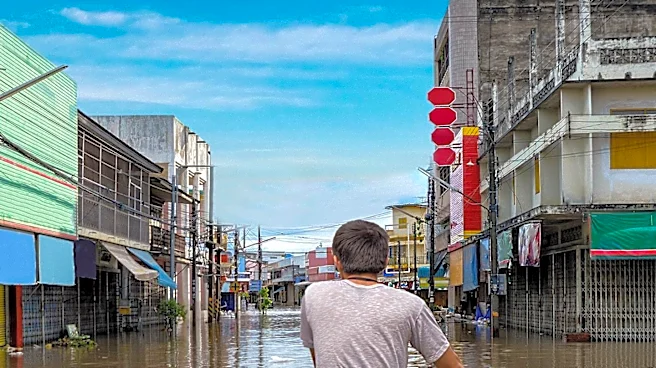
This collaboration is crucial for the Philippines, a nation highly vulnerable to climate change impacts such as heat waves, wildfires, and floods, which threaten health, food supplies, and livelihoods. By strengthening transparency and the accuracy of its climate reporting, the Philippines can gain a clearer understanding of which climate actions are effective, where gaps exist, and where additional support and investments are needed. This enhanced insight will enable the formulation of more informed policies and programs to address climate risks, protect livelihoods, ensure food security, and bolster the resilience of communities nationwide. The initiative aligns with President Ferdinand R. Marcos Jr.'s vision for a more transparent and climate-smart Philippines, where robust climate information forms the bedrock for sound policy, strategic investment, and effective climate action. Improved data and reporting can also help combat climate disinformation, which is increasingly prevalent, particularly via social media.
What's Next?
Following the five-day review, the insights and recommendations from the UNFCCC experts will be used by the Climate Change Commission and other Philippine government agencies to refine their climate reporting methodologies and integrate climate data more deeply into their operational frameworks. The CCC will continue to strengthen the country’s climate transparency mechanisms and foster coordination with government institutions and international partners. This ongoing effort aims to ensure that climate information translates into better decisions and more effective actions for the Filipino people. The enhanced reporting will also contribute to the Philippines' commitments under the Paris Agreement, potentially attracting further international support and investment for climate resilience and mitigation projects.
Beyond the Headlines
The partnership between the Philippines and the UNFCCC highlights a broader global trend towards greater accountability and data-driven approaches in addressing climate change. For the Philippines, this initiative goes beyond mere compliance with international agreements; it represents a strategic move to leverage data for national development and security. The emphasis on integrating climate data into policies and programs signifies a shift towards proactive, evidence-based governance in the face of escalating environmental challenges. This model could serve as a blueprint for other developing nations grappling with similar climate vulnerabilities, demonstrating how international collaboration and robust data systems can empower countries to build resilience and foster sustainable development. The focus on combating climate disinformation also underscores the critical role of accurate information in shaping public understanding and support for climate action.