



What's Happening?
On August 5, scientists globally are set to observe a significant space event: the collision of the spent upper stage of SpaceX's Falcon 9 rocket with the Moon. This event is scheduled to occur at approximately 06:35 Coordinated Universal Time (UTC).
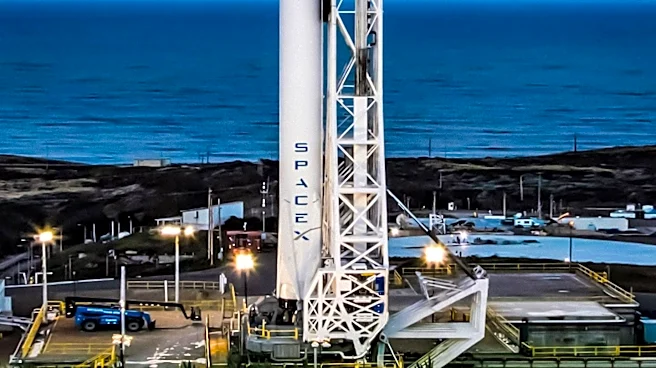
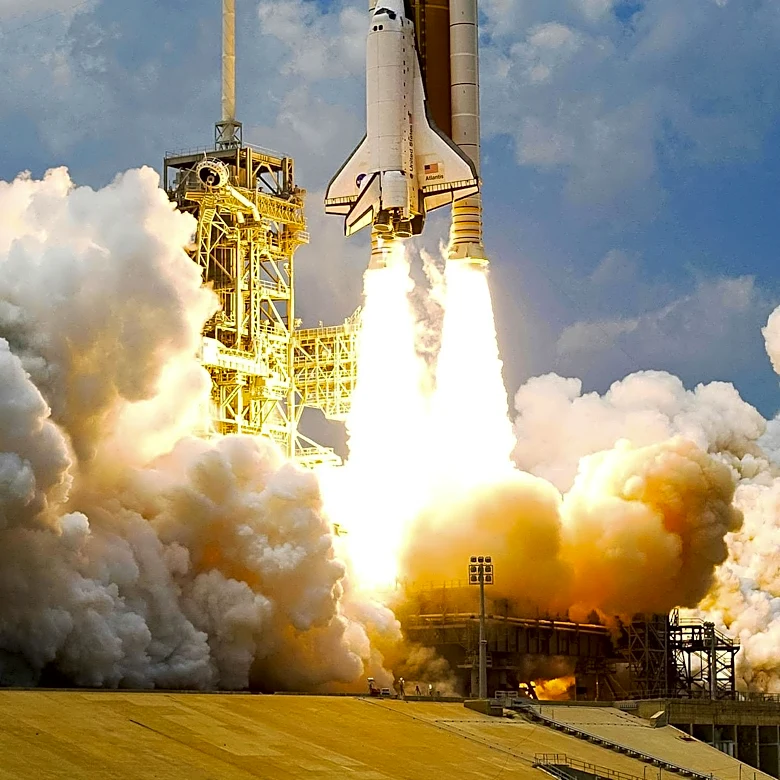
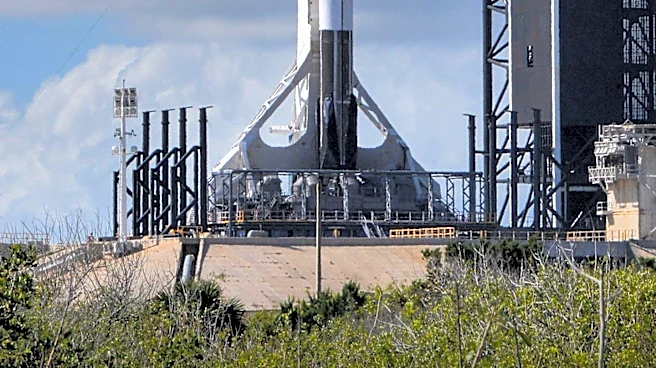
The upper stage, initially used for launching the Blue Ghost and Hakuto-R Mission 2 lunar vehicles in January 2025, has remained on a lunar trajectory. Calculations indicate that it will impact the Moon's surface, specifically near the Einstein crater, which is visible from Earth. The collision is expected to produce a flash and a cloud of lunar dust, providing a rare opportunity for scientific observation. Both professional and amateur astronomers are preparing to capture this event using ground-based telescopes and spacecraft in lunar orbit, including the American Lunar Reconnaissance Orbiter.
Why It's Important?
This event holds significant scientific value as it offers a unique opportunity to study the formation of impact craters and the behavior of lunar dust in low gravity. The data collected will enhance understanding of the Moon's surface dynamics and aid in the preparation of future lunar missions. Observing such collisions can also refine methods for detecting impacts on the Moon, contributing to broader space exploration efforts. The involvement of both professional and amateur astronomers underscores the collaborative nature of space science and the potential for new discoveries that can inform future space missions and technologies.
What's Next?
Following the collision, scientists will analyze data from various sources, including the Lunar Reconnaissance Orbiter, to assess the impact's effects. This analysis will focus on the crater formation and the dispersion of lunar dust. The findings could influence the planning and execution of future lunar missions, particularly those involving landings or surface operations. Additionally, the event may prompt further research into the dynamics of space collisions and their implications for planetary science. The scientific community will likely continue to monitor and study the Moon's surface for any long-term changes resulting from the impact.