
What's Happening?
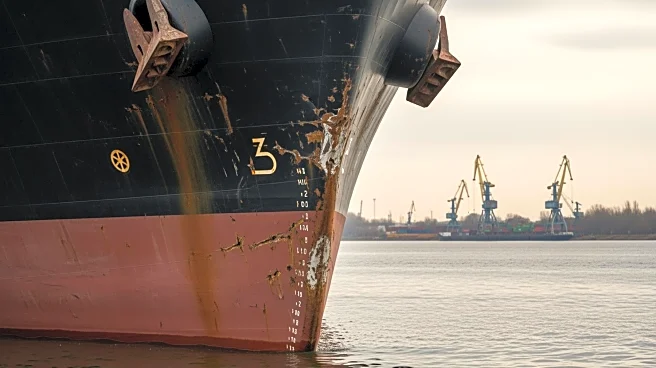
The Dutch inland cargo ship Anja 1 sustained significant damage after colliding with a wall near the German city of Dortmund. The incident occurred near the Ellinghauser Strabe bridge, causing the vessel
to take on water at the bow and lose power in the forward section. The Dortmund fire department dispatched 24 firefighters to assist the vessel, which was at risk of capsizing due to the flooding. Despite the loss of power, the Anja 1 managed to reach Hardenberg harbor under its own power, where it was moored. Emergency responders used a drone to assess the damage and a fire boat equipped with a generator to help control the flooding. Hardenberg port personnel employed a grab excavator to offload the scrap metal cargo, lightening the vessel enough to stop the water ingress and restore power. The German water police are currently investigating the cause of the collision.
Why It's Important?
This incident highlights the vulnerabilities and risks associated with inland waterway transportation, a critical component of the European and global logistics network. The ability of the Anja 1 to reach safety and the swift response by emergency services prevented a potential environmental disaster and significant economic loss. The investigation by the German water police could lead to improved safety protocols and preventive measures for similar vessels operating in the region. The event underscores the importance of maintaining robust emergency response capabilities and infrastructure to handle such maritime incidents effectively.
What's Next?
The German water police's investigation into the cause of the collision will be crucial in determining any necessary changes to navigation practices or infrastructure improvements. Depending on the findings, there may be recommendations for enhanced training for vessel operators or modifications to the waterways to prevent future incidents. The shipping company and relevant authorities will likely review and possibly update their safety and emergency response procedures. Additionally, the incident may prompt discussions on the need for technological advancements in vessel design to improve resilience against such accidents.