







What's Happening?
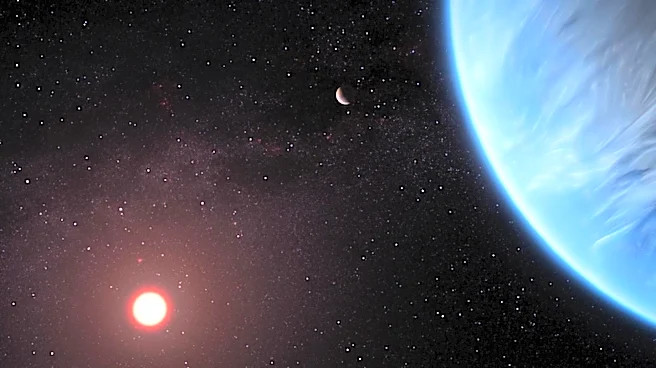
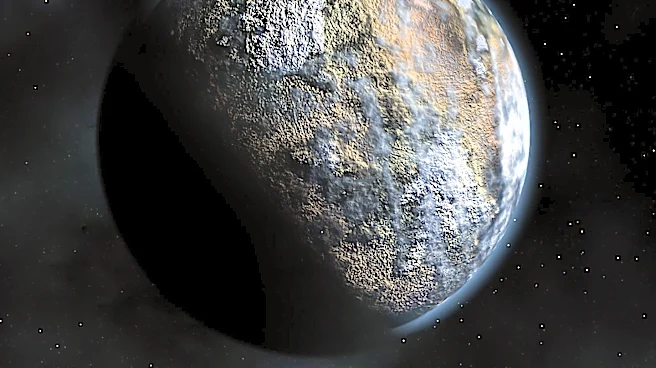
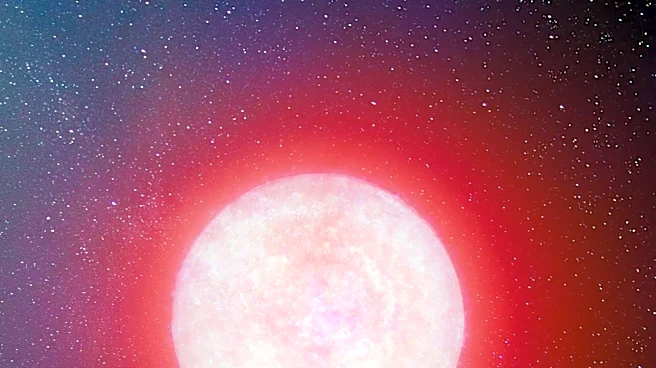
Astronomers have identified a rocky exoplanet, GJ 3378b, located approximately 25 light-years away in the constellation Camelopardalis. Initially detected in 2024 using the SPIRou instrument on the Canada-France-Hawaii Telescope, the planet was thought
to be a mini-Neptune. However, further analysis revealed it to be a super-Earth with a mass of 2.3 Earth masses. The planet orbits its host star every 21 days, placing it within the habitable zone where liquid water could potentially exist. The findings, published in the Astrophysical Journal, highlight the challenges of studying such planets, as GJ 3378b does not transit its star, complicating atmospheric characterization.
Why It's Important?
The discovery of GJ 3378b is significant as it adds to the growing list of potentially habitable exoplanets close to Earth. This proximity makes it a prime candidate for future studies aimed at detecting biosignatures, which could provide insights into the possibility of life beyond our solar system. The planet's location in the habitable zone raises the potential for liquid water, a key ingredient for life as we know it. The research underscores the importance of developing new observational techniques, as traditional methods like transit observations are not feasible for this exoplanet.
What's Next?
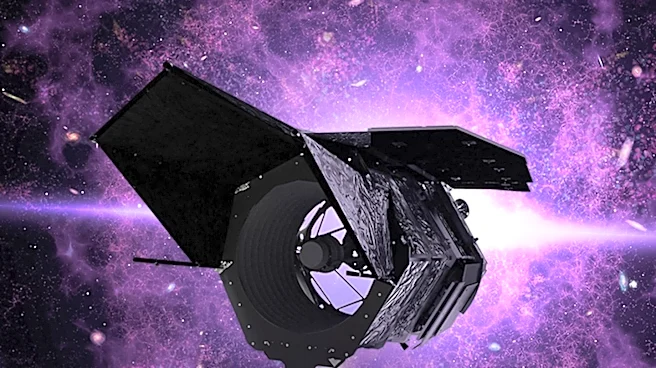
Future exploration of GJ 3378b will likely depend on advancements in space telescope technology. The upcoming NASA Habitable Worlds Observatory, slated for launch in the 2040s, may provide the necessary tools to study the planet's atmosphere and search for signs of life. In the meantime, astronomers will continue to refine their techniques for detecting and analyzing exoplanets using radial velocity and other methods. The ongoing search for biosignatures will remain a priority in the quest to understand our place in the universe.