







What's Happening?
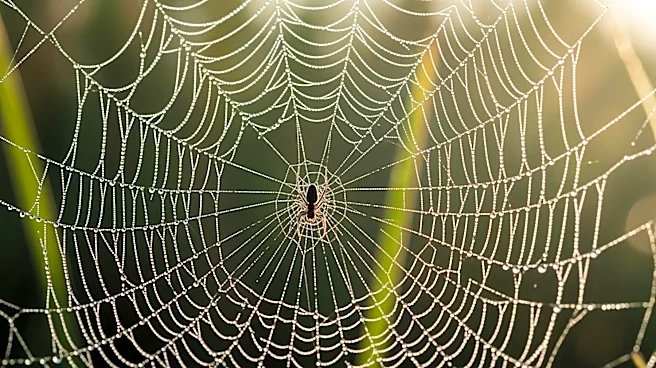
Researchers have identified a new species of spider, Pikelinia floydmuraria, which exhibits remarkable hunting capabilities despite its small size. This spider, found living in wall crevices, can capture prey up to six times larger than itself, primarily
feeding on insects like mosquitoes and flies. The discovery was made by scientists from various South American institutions, adding to the limited knowledge of the Pikelinia genus. The spider's name, Pikelinia floydmuraria, is inspired by its habitat and the rock band Pink Floyd, referencing their album 'The Wall'. The study, published in Zoosystematics and Evolution, highlights the spider's unique hunting strategy of building webs near artificial lights, where insects are naturally attracted, thus increasing its hunting efficiency.
Why It's Important?
The discovery of Pikelinia floydmuraria is significant as it contributes to the understanding of urban biodiversity and the ecological roles of small predators. By preying on common urban insects, this spider could help control pest populations, potentially reducing the need for chemical pest control methods. This could have positive implications for urban ecosystems and human health, as it may decrease the prevalence of insect-borne diseases. Additionally, the study of such species can provide insights into evolutionary biology and the adaptability of organisms to urban environments, highlighting the importance of preserving biodiversity even in city settings.
What's Next?
Further research is needed to explore the ecological and biological aspects of Pikelinia floydmuraria and its relatives. Scientists aim to conduct DNA studies to determine the evolutionary relationships within the Pikelinia genus and to understand the environmental pressures that have shaped their development. These studies could reveal more about the adaptability of spiders to urban environments and their potential role in pest management. Additionally, understanding the spider's interaction with urban ecosystems could inform conservation strategies and urban planning to support biodiversity.
Beyond the Headlines
The discovery of Pikelinia floydmuraria also raises questions about the impact of urbanization on wildlife and the potential for cities to serve as habitats for diverse species. This spider's ability to thrive in urban environments suggests that cities can support unique ecosystems, challenging the notion that urbanization is solely detrimental to biodiversity. The study underscores the need for further exploration of urban wildlife and the development of strategies to integrate biodiversity conservation into urban planning, ensuring that cities remain hospitable to a wide range of species.