








What's Happening?
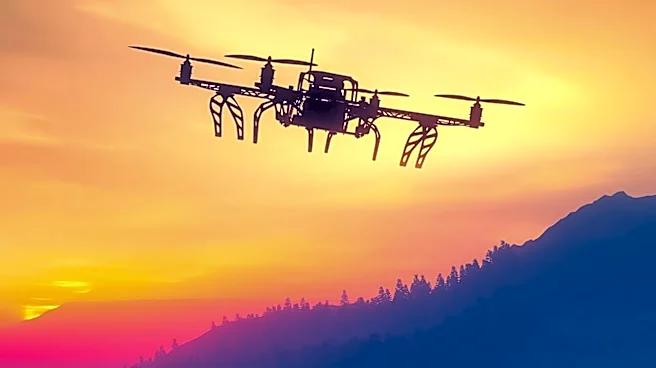
Ukraine has innovatively adapted its naval combat strategy by transforming drone boats into 'drone motherships.' These vessels are capable of deploying attack drones and interceptors, allowing Ukraine to strike or defend from greater distances and less
predictable directions. This development marks a significant shift in drone warfare, as it enables Ukrainian forces to extend the reach and effectiveness of their smaller drones. The concept of drone motherships emerged as a response to Russian adaptations in the ongoing conflict, with Ukraine now utilizing these systems to enhance both offensive and defensive operations. The Ukrainian military intelligence agency, GUR, has been instrumental in this transformation, employing naval drones like the 'Katran' to carry and release smaller drones for various missions.
Why It's Important?
The introduction of drone motherships represents a strategic evolution in modern warfare, particularly in the context of Ukraine's conflict with Russia. This approach allows for more cost-effective and flexible military operations, potentially altering the balance of power in the region. By leveraging these technologies, Ukraine can conduct precision attacks and bolster its coastal defenses, which is crucial given the frequent Russian drone attacks on key locations like Odesa. The ability to deploy drones from mobile platforms enhances the survivability and impact of these systems, providing Ukraine with a tactical advantage. This innovation could influence future military strategies and defense policies globally, as nations observe the effectiveness of such technologies in active conflict zones.
What's Next?
As Ukraine continues to refine and expand its use of drone motherships, further developments in this technology are anticipated. The Ukrainian military is likely to integrate these systems more deeply into its operations, potentially leading to new tactics and strategies. Additionally, the success of these innovations may prompt other countries to adopt similar approaches, potentially reshaping naval and aerial combat doctrines. The ongoing conflict will serve as a testing ground for these technologies, with potential implications for international military collaborations and defense industry advancements.
Beyond the Headlines
The use of drone motherships raises important ethical and legal questions regarding the conduct of warfare. The ability to launch autonomous or semi-autonomous drones from mobile platforms challenges existing frameworks governing the use of force and the protection of non-combatants. As these technologies become more prevalent, there will be a need for updated international regulations and agreements to address the implications of unmanned systems in conflict. Furthermore, the reliance on such technologies highlights the growing importance of cybersecurity and electronic warfare, as adversaries may seek to disrupt or neutralize these systems through hacking or jamming.