
What's Happening?
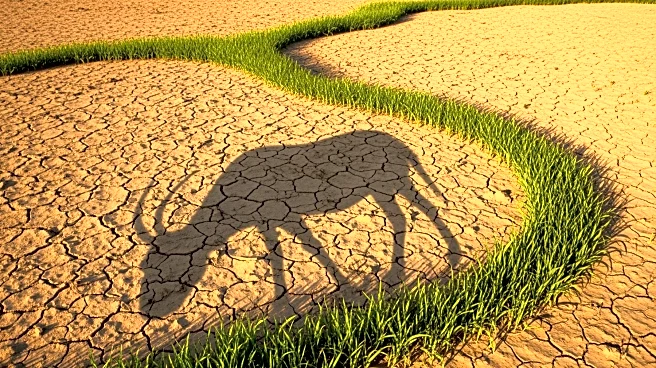
In a groundbreaking environmental initiative, the reintroduction of large native herbivores into former agricultural deserts has led to significant ecological recovery. These areas, previously degraded
by intensive agriculture, are now showing signs of regeneration, including improved soil water retention and vegetation growth. The project involves various herbivores such as wild horses, bison, and tapirs, each playing a unique role in the ecosystem. Their activities, such as seed dispersal and soil aeration, have transformed these barren lands into thriving ecosystems, demonstrating a natural and cost-effective method of land restoration.
Why It's Important?
This initiative highlights a sustainable approach to land restoration that could have far-reaching implications for environmental policy and climate change mitigation. By using natural processes to rehabilitate degraded lands, the project reduces the need for artificial interventions, lowering costs and environmental impact. The success of these projects could influence global restoration strategies, offering a model for other regions facing similar ecological challenges. Additionally, the restored lands provide ecosystem services such as biodiversity enhancement and climate regulation, contributing to broader environmental and economic benefits.
What's Next?
The success of these projects is expected to influence public policies and international restoration programs by 2030. Scaling up these efforts will require careful management to maintain ecological balance and ensure the sustainability of animal populations. As these methods gain recognition, they could become central to global strategies for land restoration, potentially transforming millions of hectares of degraded land into productive ecosystems. Continued monitoring and research will be essential to optimize these processes and expand their application worldwide.