




What's Happening?
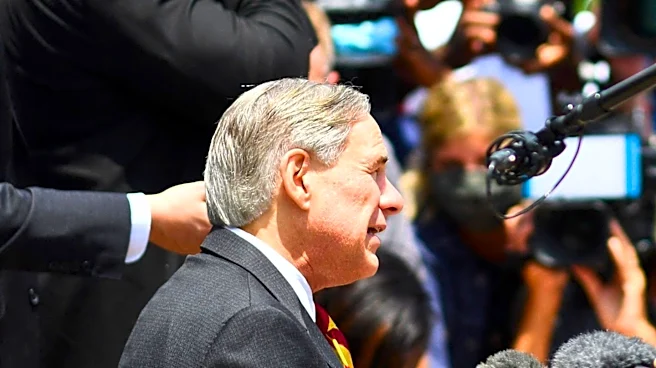
Texas Governor Greg Abbott has publicly criticized Texas airports regarding the installation of Islamic foot-washing stations, known as ablution facilities. Governor Abbott directed a review of all state grants awarded to entities operating airports in Texas,
following reports that Dallas-Fort Worth International Airport (DFW) was considering adding such facilities. In an August 14 letter sent to U.S. Secretary of Transportation Sean Duffy, Abbott argued that these facilities, used for Islamic washing rituals, are unconstitutional. He contended that they appear designed to single out one subset of the population for special treatment based on religion and violate constitutional protections against religious discrimination, as both DFW and Houston's George Bush Intercontinental Airport (IAH) are government-owned facilities. IAH already has an ablution facility connected to a prayer room, according to Abbott. Following the governor's letter and heightened public interest, DFW Airport announced on August 14 that it would not proceed with the proposed project, stating that it would not deliver the originally anticipated operational benefits.
Why It's Important?
Governor Abbott's intervention and the subsequent decision by DFW Airport highlight a contentious debate over religious accommodation in public spaces and the interpretation of constitutional principles regarding separation of church and state. The governor's argument that such facilities constitute special treatment based on religion raises questions about how public institutions should balance religious freedom with the principle of non-endorsement of any particular faith. This issue has broader implications for public policy, potentially influencing how airports and other government-owned facilities across the U.S. approach requests for religious accommodations. The swift reversal by DFW Airport demonstrates the significant impact of political pressure and public discourse on administrative decisions. For religious communities, particularly Muslims, the availability of ablution facilities is essential for fulfilling prayer obligations, and the controversy underscores the challenges of practicing faith in a diverse public sphere. The incident also reflects ongoing cultural and political tensions surrounding religious practices in American public life.
What's Next?
Following DFW Airport's decision to halt the proposed ablution facility project, the immediate next steps will likely involve the completion of Governor Abbott's directed review of state grants to Texas airports. This review could lead to new guidelines or policies regarding religious accommodations in state-funded facilities. While DFW has ceased its project, the existing ablution facility at IAH may come under further scrutiny. The broader implications of Governor Abbott's stance could influence other airports and public entities in Texas and potentially other states, prompting them to re-evaluate their own policies on religious accommodations. This event may also spark further public debate and legal challenges from civil liberties and religious freedom advocacy groups, who might argue that denying such facilities infringes upon religious rights. The incident underscores the ongoing tension between religious expression and the interpretation of constitutional mandates in public spaces, suggesting that similar issues may arise in other contexts.
Beyond the Headlines
The controversy surrounding Islamic foot-washing stations at Texas airports delves into the complex interplay of religious freedom, public accommodation, and political discourse in a pluralistic society. While Governor Abbott framed his objection in terms of constitutional discrimination, the issue also touches upon cultural understanding and the integration of diverse religious practices into public life. The debate highlights the challenges faced by religious minorities in seeking accommodations for their practices in a predominantly secular public sphere. The decision by DFW Airport, while framed as an operational one, reflects the sensitivity of such issues and the potential for public backlash. This incident could contribute to a broader national conversation about the appropriate role of religion in public institutions and the extent to which government entities should facilitate religious observances. It also underscores how local decisions can quickly become national political flashpoints, revealing deeper societal divisions and differing interpretations of American values.