




What's Happening?
California native tribes are spearheading a five-year effort to restore the Eel River, aiming to make it one of the longest free-flowing rivers in the United States. This initiative involves the removal of the Cape Horn and Scott dams, which were constructed
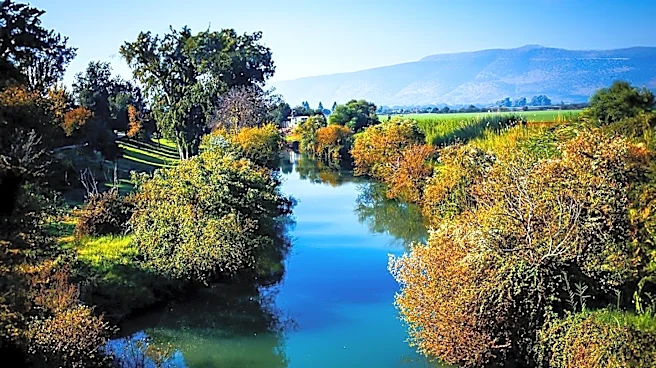
in the 1900s and significantly impacted the river's ecosystem and the tribes' ability to sustain themselves through fishing. The Eel River, spanning five counties and approximately 200 miles, is a sacred resource for the Wiyot Tribe and holds deep cultural connections to its fisheries. The decision to remove the dams gained momentum after utility giant PG&E, which owned and operated the Potter Valley Project (including the two dams), discovered that a century-old power generation system required an expensive fix, estimated at up to $15 million. Given that the system only generated enough electricity for about 750 homes, PG&E sought to divest from it. With no interested buyers for the costly hydroelectric system, PG&E submitted an application to the federal government to shut down the project, paving the way for the river's restoration. A consensus, known as the Two Basin Solution, has been reached among government agencies, environmental groups, tribes, and PG&E.
Why It's Important?
The restoration of the Eel River holds significant cultural, ecological, and economic importance. For native tribes like the Wiyot and Round Valley Indian Tribes, the free-flowing river will re-establish access to traditional food sources such as salmon, Pacific lamprey, freshwater clams, steelhead, and trout, which were blocked by the dams for over a century. This re-connection to their ancestral lands and resources is crucial for the preservation of their culture and well-being. Ecologically, the removal of the dams will restore hundreds of miles of upstream habitat for various fish species, contributing to the biodiversity and health of the river ecosystem. The Eel River is already recognized for its recreational, scenic, and wild attributes, with 398 river miles designated under the National Wild and Scenic Rivers System. The project also highlights a shift in energy priorities, as the economic viability of small-scale hydroelectric projects is being re-evaluated against their environmental and cultural impacts. The formation of the Eel Russian Project Authority (ERPA), with tribal representation, signifies a collaborative approach to environmental management and indigenous sovereignty.
What's Next?
The planned removal of the Cape Horn and Scott dams is projected to occur in the 2030s, following the agreement on the Two Basin Solution. The Eel Russian Project Authority (ERPA) has been established as the new management agency to oversee the closure of the dams and the subsequent restoration efforts. ERPA will comprise a five-member board, including representatives from the Round Valley Indian Tribes, Sonoma Water, the County of Sonoma, and the Mendocino County Inland Water and Power Commission. This collaborative governance structure aims to ensure that the interests of all stakeholders, particularly the native tribes, are represented in the restoration process. The focus will be on allowing local fish to regain access to hundreds of miles of new habitat in the headwaters. The success of this project could serve as a model for other dam removal and river restoration initiatives across the United States, particularly those involving indigenous communities and their ancestral lands.
Beyond the Headlines
This initiative transcends a simple environmental restoration project; it represents a profound step towards environmental justice and the recognition of indigenous rights. For generations, the construction of dams on the Eel River disrupted the ecological balance and severely impacted the cultural practices and food security of native tribes. The current effort to restore the river acknowledges these historical injustices and empowers tribal communities to reclaim their heritage and stewardship over their ancestral lands. The involvement of native tribes in the management and decision-making processes through ERPA signifies a shift towards more inclusive and equitable environmental governance. Furthermore, the project underscores the evolving understanding of infrastructure's long-term costs, not just in financial terms but also in ecological and cultural impacts. It highlights a growing societal recognition that the benefits of certain historical developments, like small-scale hydroelectric dams, may no longer outweigh their environmental and social detriments, paving the way for a re-evaluation of similar structures nationwide.