


What's Happening?
A fisherman named Erasto Crisanto Valdez was found alive after being trapped for 15 days in a cenote located between Veracruz and Oaxaca, Mexico. The 31-year-old disappeared while fishing with his father and was later discovered in a cavern more than
100 meters underground. The search and rescue operation involved local residents, emergency services, and divers from the Mexican Navy, as well as international specialists. A harpoon found at a depth of 65 meters provided a crucial clue that led rescuers to the deeper caverns where Erasto was eventually located. He survived by finding a 'campana' or air pocket within the cave system, which allowed him to breathe while awaiting rescue.
Why It's Important?
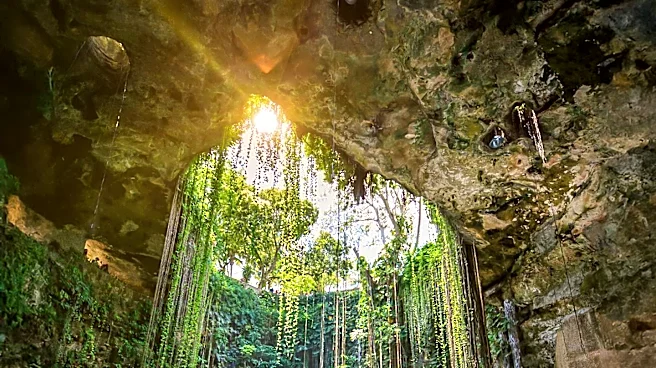
This incident highlights the complex and often dangerous nature of cenotes, which are prevalent in the Yucatán Peninsula. These natural sinkholes are part of an extensive network of underwater caves and tunnels, making rescue operations challenging. The successful rescue of Erasto underscores the importance of specialized training and equipment in such operations. It also draws attention to the potential risks faced by those who explore or work in these environments. The story of Erasto's survival is a testament to human resilience and the effectiveness of coordinated rescue efforts, which can serve as a model for similar situations worldwide.
What's Next?
Following his rescue, Erasto was transported to a medical facility for evaluation and treatment after spending over two weeks without food. The incident may prompt local authorities to review safety protocols and emergency response strategies for cenote-related activities. It could also lead to increased awareness and education about the risks associated with cenotes, potentially influencing tourism and local fishing practices. The story may inspire further exploration and documentation of the cenote systems, contributing to a better understanding of these unique geological formations.
Beyond the Headlines
Cenotes hold significant cultural and historical importance, particularly for the Maya civilization, which relied on them for water and considered them sacred. The discovery of Erasto in a cenote highlights the ongoing relevance of these sites in contemporary life. The incident may also spark discussions about the preservation and protection of cenotes, balancing their cultural significance with the need for public safety. Additionally, it raises questions about the environmental impact of human activities on these delicate ecosystems.