
What's Happening?
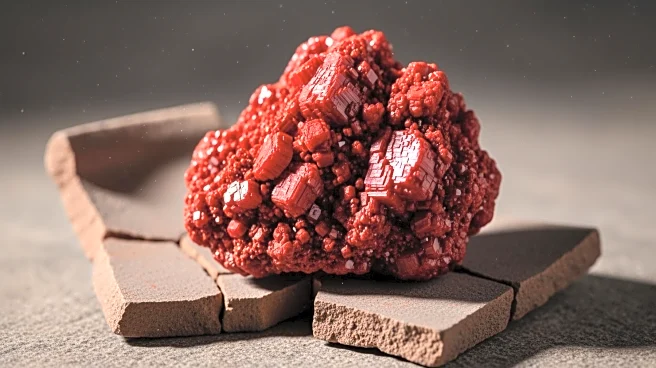
Archaeologists have uncovered a significant find in a 2,000-year-old grave at Chervony Mayak, an ancient Scythian cemetery in Ukraine. The discovery involves the presence of cinnabar, a toxic mineral,
within the burial site. This mineral, known for its bright red color, was found in a thin layer covering sediment in the grave, which also contained quartz, microcline, albite, and calcite. The presence of cinnabar in this context is unprecedented for the Late Scythian period, suggesting a previously undocumented aspect of burial customs. Researchers believe the use of cinnabar was intentional, possibly for ritualistic purposes, although its exact function remains undetermined. The grave contained the remains of two women, with the cinnabar deposits found near the skull of the older woman, alongside beaded jewelry and copper alloy items.
Why It's Important?
This discovery is crucial as it provides new insights into the burial practices of the Late Scythian period, highlighting the potential ritualistic use of toxic substances. The intentional use of cinnabar, despite its known toxicity, suggests complex cultural or religious practices that may have included symbolic or ceremonial elements. Understanding these practices can offer a deeper comprehension of ancient societies and their interactions with natural resources. The findings also underscore the importance of archaeometric analyses in uncovering historical practices, which can lead to a reevaluation of previously held assumptions about ancient cultures.
What's Next?
Future studies aim to determine the origin of the cinnabar, which is known to be found in southern Ukraine. This could provide further context for its use in the burial and its role in trade during the period. Additional analyses and an extended reference database are necessary to fully understand the function and provenance of the pigments found. These efforts may reveal more about the cultural and economic exchanges of the time, as well as the broader implications of using such substances in burial rituals.
Beyond the Headlines
The discovery of cinnabar in ancient graves raises questions about the ethical and health implications of using toxic substances in burial practices. It also highlights the long-standing human interaction with hazardous materials, which continues to be relevant in modern discussions about environmental and occupational health. The intentional use of cinnabar for its aesthetic and possibly symbolic properties reflects a cultural valuation that prioritized ritual significance over health risks, a perspective that can inform current debates on the balance between cultural practices and safety.