


What's Happening?
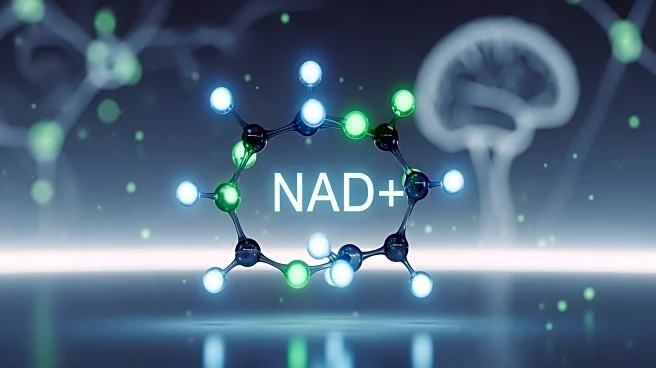
A recent study has revealed a potential breakthrough in Alzheimer's treatment by restoring the brain's energy balance, specifically focusing on the molecule NAD+. Researchers from University Hospitals, Case Western Reserve University, and the Louis Stokes
Cleveland VA Medical Center have found that maintaining normal levels of NAD+ in the brain can prevent Alzheimer's from developing in mice. More significantly, restoring NAD+ levels in mice with advanced Alzheimer's led to the reversal of cognitive decline and repair of brain damage. This discovery challenges the long-held belief that Alzheimer's is irreversible once it begins. The study, published in Cell Reports Medicine, suggests that treatments aimed at restoring NAD+ balance could move Alzheimer's therapy beyond merely slowing decline to potentially achieving recovery.
Why It's Important?
This discovery is significant as it opens new avenues for Alzheimer's treatment, a disease that affects millions of people worldwide and has long been considered untreatable once symptoms appear. The ability to reverse cognitive decline in mice suggests that similar strategies could be developed for humans, potentially transforming the approach to Alzheimer's therapy. If these findings can be replicated in human trials, it could lead to the development of new drugs that not only slow the progression of Alzheimer's but also restore lost cognitive functions. This could have profound implications for patients, caregivers, and healthcare systems, potentially reducing the burden of the disease and improving quality of life for those affected.
What's Next?
The next steps involve translating these findings into human clinical trials to determine if the efficacy seen in mice can be replicated in humans. Researchers are also exploring complementary strategies and further investigating the role of NAD+ in brain energy balance. The technology is being commercialized by Glengary Brain Health, aiming to develop therapeutic strategies that could offer a path to disease recovery. These efforts will focus on pinpointing which aspects of brain energy balance are most crucial for recovery and evaluating whether this approach is effective in other neurodegenerative diseases.