


What's Happening?
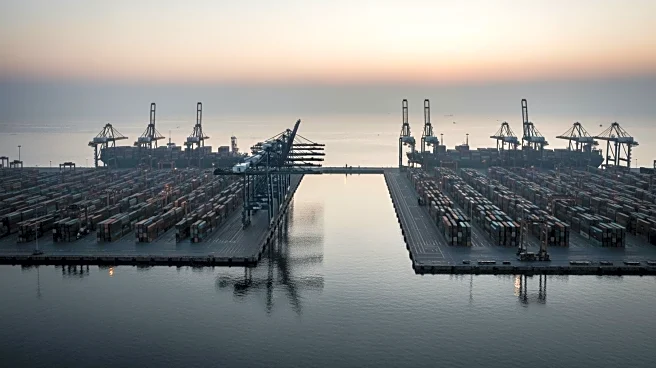
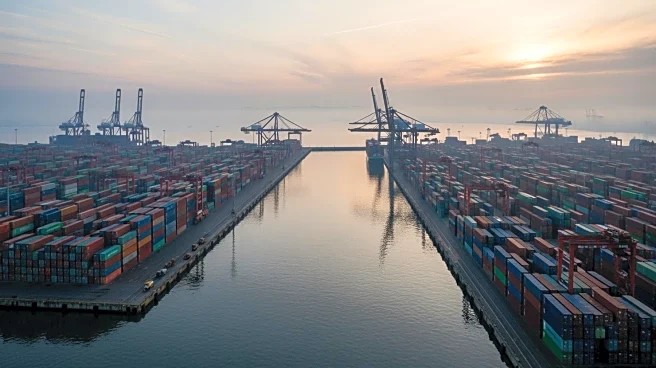
The Port of Los Angeles (POLA) and the Port of Long Beach (POLB) have reported a decline in their January 2026 volumes. POLA's volume fell by 12% annually to 812,000 TEU, with imports and exports decreasing by 13% and 8% respectively. POLB also saw an 11%
annual decline in volume, although it recorded the highest volume of any U.S. port in January. The decline is attributed to several factors, including comparisons to elevated numbers from the previous year when importers rushed to move cargo ahead of tariffs, and ongoing trade policy uncertainties. Despite these challenges, consumer demand remains resilient, and future purchase orders to Asia appear stable.
Why It's Important?
The decline in port volumes at POLA and POLB highlights ongoing challenges in the global supply chain, influenced by trade policy uncertainties and past tariff impacts. These ports are critical gateways for U.S. trade, and fluctuations in their activity can have significant implications for the national economy. The reported decline may affect various stakeholders, including retailers, shippers, and consumers, who could face higher costs and supply chain disruptions. The situation underscores the need for clarity in trade policies to stabilize the market and support economic growth.
What's Next?
Looking ahead, the ports anticipate continued uncertainty following a recent U.S. Supreme Court ruling that declared certain tariffs unconstitutional. This decision has not fully resolved the uncertainty in the global supply chain, as stakeholders await clarity on potential tariff refunds and their impact on prices. The ports are preparing for another strong year, projecting significant TEU volumes, but the outcome will depend on how trade policies evolve and how the market responds to these changes.