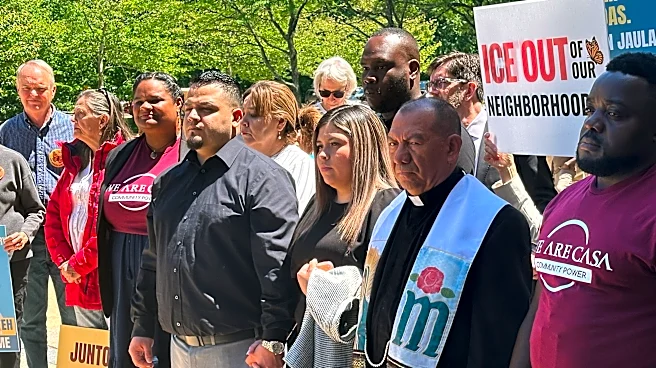

What's Happening?
Two controversial immigration bills in Maryland, which limit local law enforcement's cooperation with U.S. Immigration and Customs Enforcement (ICE), are set to become law without the signature of Governor
Wes Moore. These bills aim to restrict the extent to which local authorities can engage with federal immigration enforcement, reflecting a broader trend in some states to distance local law enforcement from federal immigration policies. The decision not to sign the bills, yet allow them to become law, suggests a nuanced stance by the governor, possibly balancing between different political pressures and public opinion.
Why It's Important?
The enactment of these bills could significantly impact the relationship between state and federal authorities in Maryland, particularly concerning immigration enforcement. By limiting cooperation with ICE, Maryland joins a group of states seeking to protect undocumented immigrants from federal immigration actions. This move could affect the state's immigrant communities, potentially providing them with a greater sense of security. However, it may also lead to tensions between state and federal agencies, as well as among local law enforcement officials who may have differing views on immigration enforcement. The decision reflects ongoing national debates over immigration policy and states' rights.