






What's Happening?
Polish authorities issued alerts in the southeastern regions of Lublin and Podkarpackie, bordering Ukraine, due to Russian airstrikes on Ukrainian territory. The Government Security Center (RCB) sent out notifications via mobile networks and social media,
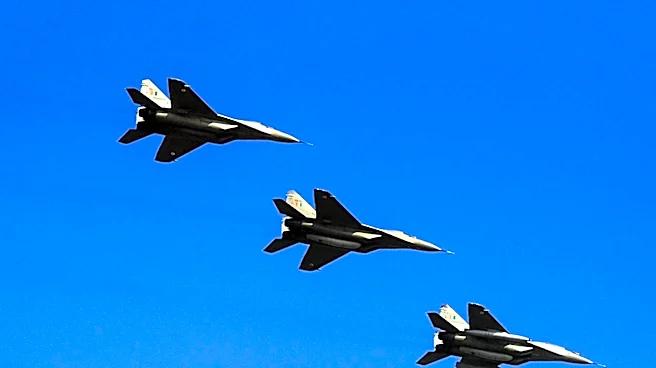
announcing that Polish Air Force jets had been scrambled to monitor the situation. The alert was issued around 3 PM local time, with an update approximately an hour later stating that "the threat had ceased." The RCB noted that the situation developed rapidly, meaning some residents might have received the cancellation notice before the initial alert. This incident occurred amidst warnings from Ukraine's air force about Russian air attacks across various parts of Ukraine, including Kyiv, which has recently been subjected to sustained drone attacks as long-range strikes between Russia and Ukraine intensify.
Why It's Important?
The issuance of alerts and the scrambling of Polish Air Force jets underscore the direct impact of the ongoing conflict in Ukraine on neighboring NATO member states. Poland's proximity to Ukraine means that the effects of the war, such as potential incursions of drones or missiles, can spill over its borders, necessitating immediate defensive measures. This event highlights the heightened state of alert and the continuous monitoring required by countries bordering the conflict zone. It also demonstrates the potential for rapid escalation and the need for swift governmental response to ensure civilian safety. The incident serves as a reminder of the broader regional instability caused by the conflict and the constant vigilance required by NATO allies to protect their airspace and citizens.
What's Next?
Polish authorities will likely continue to maintain a high level of vigilance and readiness along their border with Ukraine, given the ongoing nature of Russian strikes. The incident may prompt further reviews of air defense protocols and coordination with NATO allies to ensure a robust response to any future potential border infringements. The continuous exchange of long-range attacks between Russia and Ukraine suggests that similar situations could arise, requiring repeated alerts and defensive actions from neighboring countries. International observers will continue to monitor the situation closely for any signs of escalation or direct impact on NATO territory, which could trigger broader geopolitical responses.
Beyond the Headlines
This event highlights the concept of 'spillover' from regional conflicts, where military actions in one country directly affect the security and operational readiness of its neighbors. For Poland, a frontline NATO state, such incidents reinforce the strategic importance of its air defense capabilities and its role within the alliance's collective security framework. The rapid issuance and cancellation of alerts also point to the challenges of real-time threat assessment and communication during dynamic military situations. Ethically, it raises questions about civilian preparedness and the psychological impact of living in close proximity to an active war zone, where alerts can be frequent and unpredictable, potentially leading to public anxiety and disruption.