





What's Happening?
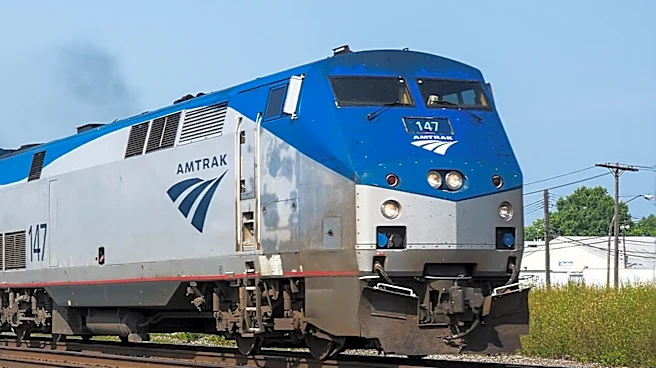
The Schuylkill River Passenger Rail Authority (SRPRA) has reached an agreement with Amtrak to operate a future passenger rail service connecting Reading, Pottstown, Phoenixville, and Philadelphia. This development marks a significant step towards restoring
train service along the Schuylkill River corridor, which has been absent for over 40 years. The project, estimated to cost around $100 million for the rail component, will primarily utilize existing freight corridors owned by Norfolk Southern, with potential use of CSX tracks. Federal grants are expected to subsidize much of the infrastructure cost, while station renovations will require local funding. The most optimistic timeline projects the first trains to be operational at four core stations as early as 2030. Amtrak is currently developing ridership estimates and other operational variables, with a report expected later this year.
Why It's Important?
The restoration of passenger rail service along the Schuylkill River corridor is crucial for addressing growing traffic congestion and improving connectivity in a rapidly developing region. Populations in Reading and Phoenixville have expanded significantly since the previous rail service ceased in 1981, leading to increased road strain. This project offers a more sustainable and efficient transportation alternative, potentially alleviating traffic, reducing commute times, and fostering economic development in the connected communities. For Northeast Philadelphia commuters, who often face challenges with SEPTA Regional Rail's funding crisis, this initiative represents a rare positive development in regional passenger rail. The federal government's support for untapped rail corridors, as highlighted by SRPRA's inclusion in a select group for grant funding, underscores a national push to enhance intercity travel options and capture demand beyond traditional commuting hours.
What's Next?
The next phase of the project will be shaped by Amtrak's ridership and operations report, expected later this year. This report will provide crucial data for finalizing planning and operational details. The overall timeline is also dependent on the delivery of Amtrak's new Airo trains from Siemens, which are currently in testing and could enter passenger service in the Pacific Northwest later this year. These trains offer flexibility with diesel, electric, or dual-powered configurations. Finalizing track arrangements with Norfolk Southern and potentially CSX is also a key step. SRPRA anticipates relying on a combination of federal, state, and county operating subsidies in its initial stages, similar to Amtrak's Keystone Service. The long-term vision includes potentially linking this service with other Amtrak lines, extending trips to New York or Washington, D.C., offering broader regional connectivity.
Beyond the Headlines
This project represents a shift in regional transportation strategy, moving away from the more ambitious, high-cost plans of the past (like the $2 billion Schuylkill Valley Metro) towards a leaner, more pragmatic approach utilizing existing infrastructure. This strategy of leveraging federal support for 'ready for prime time' corridors could serve as a model for other regions looking to revive or expand passenger rail services. The success of this initiative could demonstrate the viability of incremental, cost-effective rail development, potentially influencing future federal and state funding priorities. Furthermore, the project's focus on intercity travel demand, rather than solely peak-hour commuting, reflects an adaptation to evolving post-COVID commuting patterns and a broader vision for integrated regional mobility, offering a more flexible and comprehensive transportation network for residents and businesses.