








What's Happening?
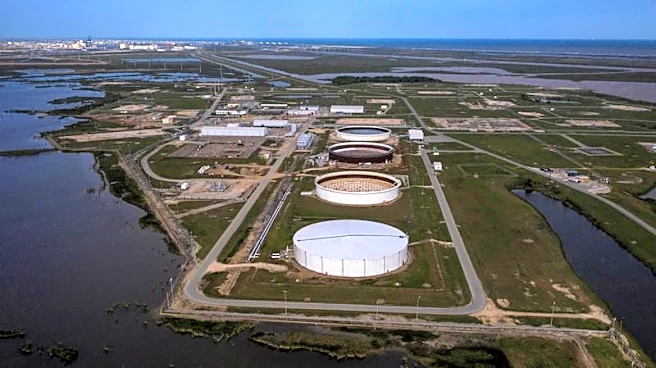
The United States Strategic Petroleum Reserve (SPR) has reached its lowest level since 1983, as the Trump administration continues to release emergency oil to mitigate the impact of the ongoing war with Iran. According to federal data, 75 million barrels
have been released since late February, leaving the reserve with 340.3 million barrels of crude. This depletion is part of a strategy to address high energy prices, which have been exacerbated by the conflict. The SPR, a critical tool for managing energy crises, is now less than half full, raising concerns about its ability to buffer against potential disruptions, such as hurricanes. Industry experts, including Mike Sommers, CEO of the American Petroleum Reserve, have expressed concern over the reserve's diminished capacity, warning that it must remain at least 20% full to be operational.
Why It's Important?
The depletion of the SPR is significant as it reduces the United States' ability to respond to future energy crises. The reserve has historically been used to stabilize oil prices and ensure energy security during geopolitical conflicts and natural disasters. With the reserve at its lowest level in decades, the U.S. is more vulnerable to supply disruptions, which could lead to increased energy prices and economic instability. The situation also highlights the challenges of balancing immediate economic relief with long-term energy security. The ongoing releases have helped prevent a spike in oil prices, but the reserve's diminished state could limit future options for managing energy supply shocks.
What's Next?
The Trump administration's current strategy involves releasing a total of 172 million barrels, a plan that may need to be reassessed as the reserve's levels continue to drop. The administration will need to consider how to replenish the SPR while managing current energy demands. Additionally, the potential for hurricanes in the Gulf of Mexico poses a risk to oil production, which could further strain the reserve. Policymakers and industry leaders will need to address these challenges to ensure energy stability and security in the coming months.