







What's Happening?
Tapo has released a range of smart home security gifts, all priced under $100, designed to offer home security solutions without requiring monthly subscription fees. The lineup includes various devices such as the Tapo C210 pan/tilt indoor camera, the Tapo C236
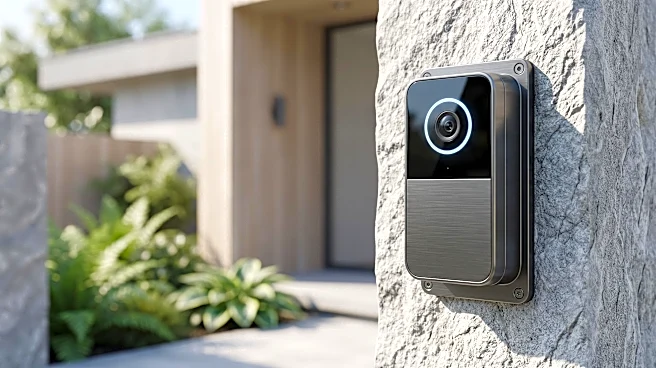
2-Pack for indoor/outdoor coverage, the Tapo C425 MagCam for renters, and the Tapo D210 video doorbell. A notable offering is the Tapo T31 Kit, a camera-free security solution that includes a central hub and three door and window sensors. This hub can sound a 90-decibel alarm and connects up to 64 sensors, switches, and buttons. All devices are managed through the Tapo app and feature free AI-powered detection for alerts on motion, people, and other events, with local storage options via microSD cards.
Why It's Important?
Tapo's introduction of affordable, subscription-free smart home security devices under $100 is significant for the U.S. market. This pricing strategy makes smart home security more accessible to a broader consumer base, potentially accelerating its adoption among budget-conscious households. The emphasis on no monthly fees directly challenges the traditional subscription-based models prevalent in the security industry, offering consumers a cost-effective alternative. The inclusion of a central hub in the Tapo T31 Kit, which supports multiple sensors, promotes a scalable and integrated security system, allowing users to expand their coverage as needed. This move could intensify competition in the smart home security sector, pushing other manufacturers to offer more competitive pricing and flexible service models. For consumers, it means more options for securing their homes without incurring recurring costs, which could lead to increased peace of mind and a greater sense of control over their home security systems.
What's Next?
The availability of these affordable smart home security gifts from Tapo is expected to drive increased consumer interest, particularly during holiday shopping seasons. Other smart home device manufacturers may respond by adjusting their pricing strategies or introducing similar subscription-free models to remain competitive. The market could see a rise in demand for devices that offer local storage and AI-powered detection without ongoing fees. Tapo's strategy of offering a scalable hub-based system suggests future expansions in its ecosystem, with more compatible sensors and smart devices. Consumers can anticipate a continued trend towards more accessible and customizable smart home security solutions, with a focus on user-friendly interfaces and straightforward installation processes. The success of these products could also influence the development of new smart home standards that prioritize affordability and user control over data and services.
Beyond the Headlines
The shift towards subscription-free smart home security, exemplified by Tapo's offerings, has broader implications for data privacy and ownership. By relying on local storage via microSD cards, these devices give users more direct control over their recorded footage, reducing dependence on cloud services and the associated privacy concerns. This model empowers consumers by allowing them to decide how their data is managed, contrasting with cloud-based systems where data is often stored on third-party servers. However, it also places the responsibility of data backup and security squarely on the user. The widespread adoption of such systems could lead to a re-evaluation of data privacy norms in the smart home industry, potentially influencing future regulations regarding data collection, storage, and access. Furthermore, the ease of setup and lack of ongoing costs could democratize home security, making advanced surveillance and monitoring tools available to a wider demographic, which could have societal impacts on neighborhood safety and personal autonomy.